

How to Buy a Professional Sneaker Cleaning Brush Kit
Buy a professional sneaker cleaning brush kit with confidence. Learn bristle types, kit contents, and material matching before you spend.

Last Updated: October 14, 2026
Suede is leather with a brushed, velvety surface, and that surface is what makes it fragile.
That is why the best way to clean suede sneakers is almost always dry-first and gentle, control the pressure, control the moisture, never attack the surface.
Suede sneakers also mix materials, suede upper, rubber midsole, mesh tongue, and each needs a different touch.
A suede shoe cleaning kit needs just the right few items, used in the right order.
Skip harsh soaps, detergent, and bleach. Dish soap strips the finish and can leave a stiff, chalky patch.
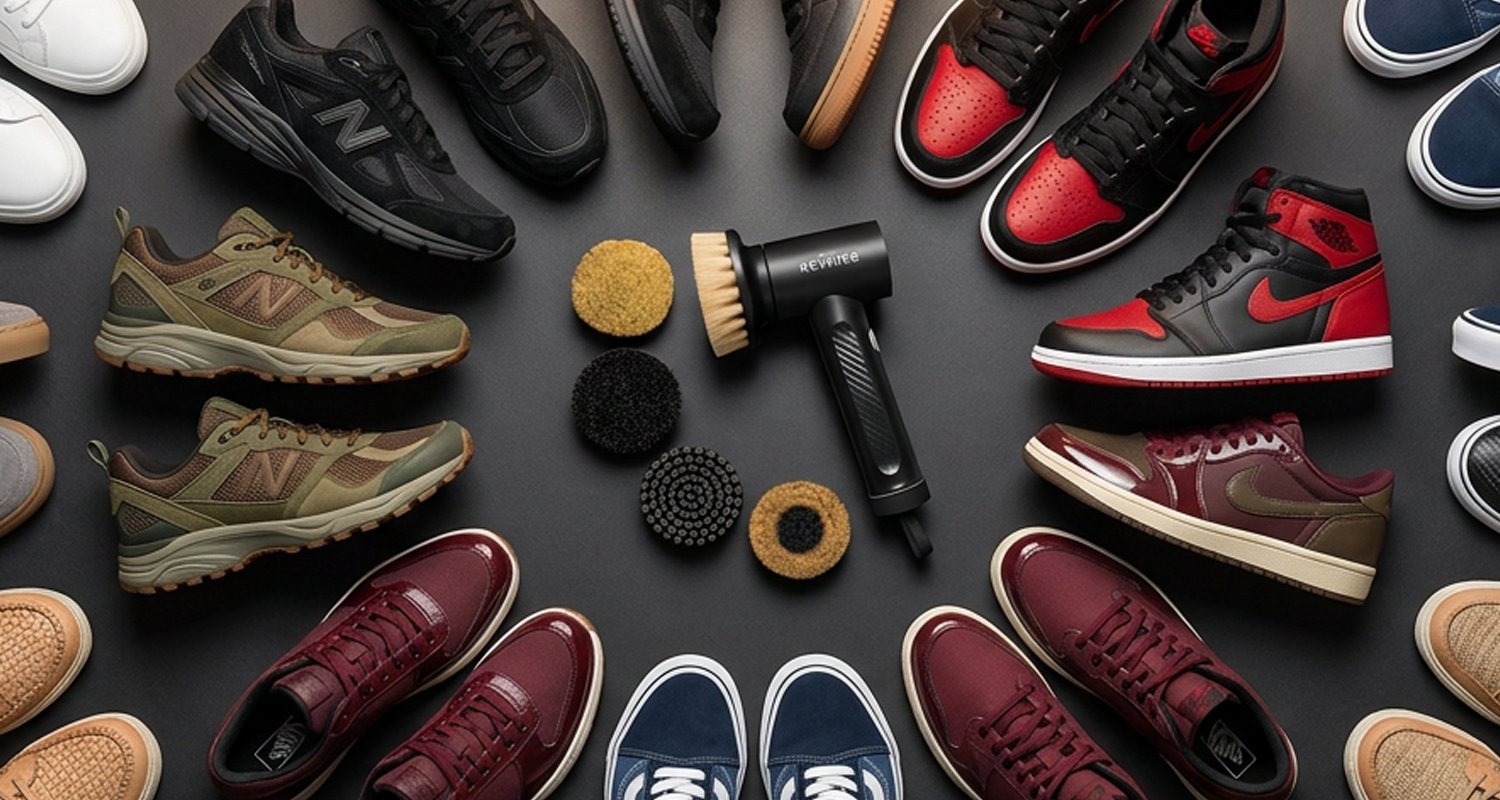
An electric cleaning brush with a soft head speeds up the job on midsoles and mesh. Our Rekanize brush ships with four 3-inch heads, including a natural fiber soft brush for delicate suede and a firm bristle scrub brush for soles.
The best way to clean suede sneakers at home is three stages: dry brush, treat marks, then deep clean only where needed. Most pairs never need the third stage.
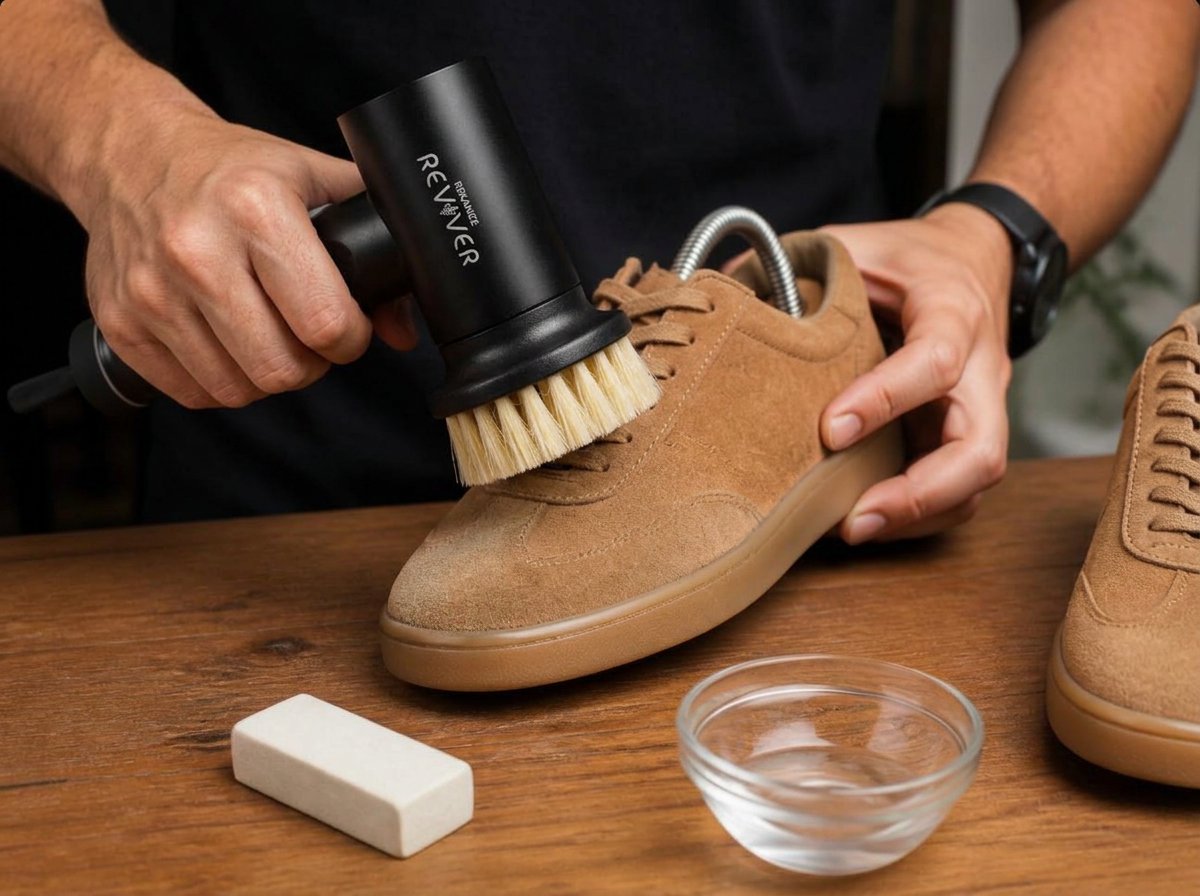
Close-up of hands using the Reviver on a pair of tan suede sneakers, with a suede eraser and small bowl of cleaning solution nearby on a wooden table
Work in daylight so you can see the nap direction. Set aside about ten minutes per pair.
Start dry. A dry brush removes more dirt than any liquid and does zero damage.
Brush in one direction, following the nap, with short light strokes, no hard pressing. Knock the brush out as dust builds up.
For caked-on mud, let it dry completely first, then brush it off. Wet mud smears deeper into the fibers.
A suede eraser handles most scuffs, dark marks, and light surface dirt. Rub it back and forth with light pressure, like a pencil eraser, it lifts the mark without wetting the suede.
Brush away the crumbs when you finish. If the mark stays, move to a cleaner rather than rubbing harder.
For set-in grime, apply a small amount of suede cleaner or foam cleaner to a clean rag or soft brush, not directly to the shoe, and work it in with light circular motion over one small area at a time.
Wipe the residue with a dry cloth right away, then air-dry away from direct heat. If you use an electric brush here, keep it on the lowest speed with a soft head.
Stain removal on suede depends on what spilled, oil, water, ink, and grease each need a different first move, and getting it wrong sets the stain.
|
Stain Type |
First Move |
Then |
Avoid |
|---|---|---|---|
|
Oil or grease |
Sprinkle absorbent powder |
Brush out, then clean |
Rubbing it in |
|
Water |
Blot and air-dry |
Brush the nap up |
Heat or a hair dryer |
|
Mud |
Let it dry fully |
Dry brush it off |
Wet cloths |
|
Scuffs |
Suede eraser |
Brush the nap |
Hard scrubbing |
|
Ink or dye transfer |
Rubbing alcohol on a cloth |
Blot, do not rub |
Flooding the panel |
|
Unknown liquid |
Blot, test a hidden spot |
Mild cleaner |
Soaking the shoe |
Before any liquid goes on visible suede, test it on a hidden spot: the inside of the tongue, the heel counter, or under the collar.
This test matters most on colored, dyed, and dark suede. Light gray and tan show tide marks easily; black and navy hide water rings but bleed dye onto lighter panels and socks.
For a fresh water stain, blot and air-dry, then brush the nap back up.
White vinegar on a cloth can lift light water marks and mild salt stains.
Rubbing alcohol works on ink and some set stains, but it is the harshest of the three.
A suede cleaner or foam made for the job is the safer default when you are unsure what spilled.
Do not wipe an oil stain. Wiping spreads it. Instead, sprinkle cornstarch or another absorbent powder over the spot and let it sit for several hours, or overnight.
The powder pulls the oil up out of the fibers. Brush it away, then follow with a suede cleaner if a mark remains. For grease, the same method works but give it more time, grease is thicker and wicks more slowly.
Ink is the hardest stain to remove from suede, and dye transfer from dark denim or a wet strap is a close second. For ink, dampen a cloth with rubbing alcohol, dab, do not rub, and rotate to a clean part of the cloth with each dab so you are not pushing ink back in.
If two gentle attempts do not move the stain, stop. Overworking the surface causes more harm than the stain, and a professional leather cleaner is the better next step.
Wet suede is not ruined suede, but the next hour matters. Blot the shoe with a dry cloth to pull off surface moisture. Do not rub.
Stuff the shoe with clean rags or paper to hold its shape, then air-dry at room temperature away from radiators, sun, and hair dryers, heat stiffens the leather and can shrink it.
Once dry, brush the nap back up with the suede Reviver brush. If it feels flat, a light pass with the eraser and brush usually brings it back.
Over-wetting happens to almost everyone, a soaked cloth, a spilled bowl, a surprise downpour. What matters is the first few hours.
A tide mark is the dark border left when a wet patch dries unevenly. It is not dirt, it is dissolved dye and oils that migrated to the edge of the wet area and dried there.
The fix is to rewet the entire panel evenly, not just the ring. Dampen a clean cloth with water or mild suede cleaner, wring it barely damp, and wipe the whole panel edge to edge.
Dye bleeding shows up as a darker halo around a wet spot, or color transferred onto a lighter panel, a sock, or a white midsole. Once dye has moved you cannot put it back, but you can reduce the visible damage.
Stiff suede usually means one of three things: it dried too fast, it dried with cleaner residue still in it, or it soaked long enough to strip the natural oils.
Suede sneakers have a shape to protect, not just a surface to dry. Stuff the toe and heel so the shoe holds its form, and swap the stuffing if it gets soaked. Cedar shoe trees can be too rigid for soft suede sneakers, paper or cloth is gentler. Never dry suede sneakers on a radiator, in a hot car, or with a hair dryer.
To restore the nap, brush in one direction with a soft suede brush once the shoe is fully dry. For stubborn flat spots, a light pass with the eraser, then a brush, usually does it. A protective spray after drying helps the next cleanup go faster.
The damage almost always comes from too much force or too much water. The most common mistakes:
A little upkeep beats a deep clean every time.
Brush your suede sneakers after each wear. It takes under a minute and keeps dust from working into the nap. Store them away from damp and direct sun.
For colored or delicate suede, test every product on a hidden spot first, and use the softest brush you own.
Dawn and similar dish soaps are too harsh for suede. They strip natural oils, leave residue, and can stiffen the nap. Use a dedicated suede cleaner or a mild solution of water and a few drops of gentle shampoo instead. If you must use soap, dilute it heavily, apply with a damp cloth, and rinse thoroughly. Even then, dish soap risks discoloration on colored suede, so test on a hidden area first.
No, suede is not ruined by water alone. The key is how you dry it. Blot excess moisture with a clean dry cloth, stuff the sneakers with paper to hold their shape, and let them air-dry away from direct heat. Once dry, brush the nap to restore texture. Water stains happen when moisture dries unevenly, so dampen the entire panel if needed to blend the edges before drying.
Avoid harsh chemicals like bleach, ammonia, and dish soap. Do not use a Magic Eraser; its abrasive melamine foam scrubs away the suede’s surface and causes permanent damage. Skip stiff bristle brushes meant for leather or rubber, and never soak suede in water. Also avoid washing machines and dryers, which warp the shape and ruin the nap.
Once the sneakers are completely dry, use a suede brush or a soft-bristle brush to gently lift the nap. Brush in one direction, following the natural grain. For stubborn flattened areas, use a suede eraser first, then brush again. A light steam from a garment steamer can help raise the nap, but keep the steamer a few inches away and brush immediately after.
Suede rewards patience, and it punishes force. That is the whole game. If you want to take the guesswork out of it, Rekanize makes an electric sneaker cleaning brush called the Reviver with two controlled speeds and four 3-inch brush heads, including a natural fiber soft brush for suede and a firm bristle scrub brush for soles. It is built for footwear, so you can clean with control instead of hoping for the best. Get started with Rekanize and keep every pair looking sharp.
Buy a professional sneaker cleaning brush kit with confidence. Learn bristle types, kit contents, and material matching before you spend.
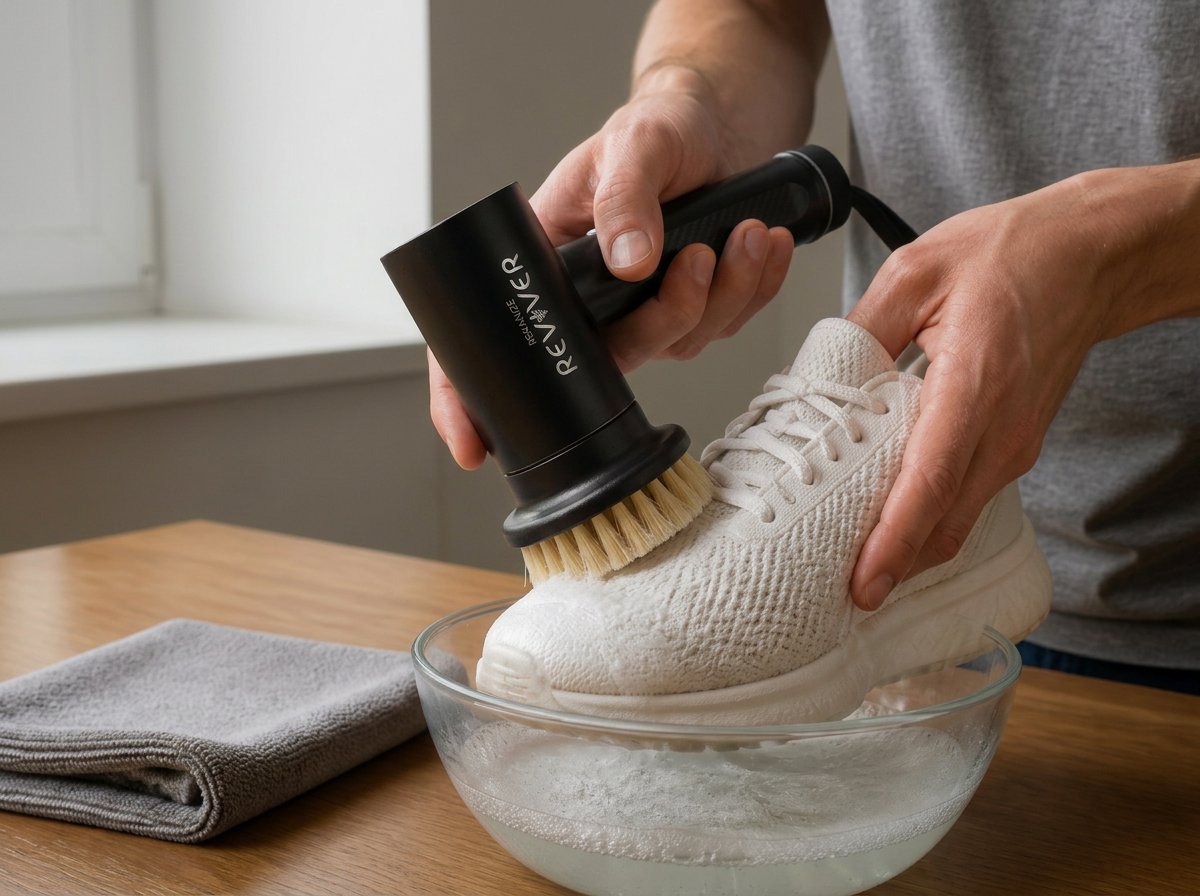
Learn how to clean mesh sneakers without damage using gentle tools, the right solution, and safe drying. Keep your mesh shoes fresh and intact.
