

How to Buy a Professional Sneaker Cleaning Brush Kit
Buy a professional sneaker cleaning brush kit with confidence. Learn bristle types, kit contents, and material matching before you spend.

Last Updated: October 19, 2026
Mesh sneakers are engineered fabrics, not flat sheets of material. Woven or knitted strands create tiny gaps that let air through, which is exactly why they breathe well and exactly why dirt, dust, and soap get trapped inside the structure. Scrub too hard and those strands fray. Use the wrong product and the fibers weaken or yellow.
At Rekanize, we treat mesh as the most fragile surface on any sneaker. It has no protective coating like leather and no tight weave like canvas. The structure does the work, so you have to be gentle with it.
Here is what most guides get wrong: they treat mesh like canvas and tell you to scrub hard. That is the fastest way to a fuzzy, discolored upper. Below, we break down a safe hand-washing method step by step, plus how to dry mesh sneakers without heat damage.
Gather these before you touch the shoe. Stopping mid-clean to hunt for supplies means soap dries into the mesh, which is harder to rinse out.
Check the care label first. Some mesh uppers are blended with glued overlays or reflective panels that react badly to soaking. If the label says spot clean only, follow it.
Skip bleach, hydrogen peroxide, and alcohol. These strip color and break down synthetic fibers over time.
Hand washing is the safest route for mesh. A washing machine’s agitation is the single biggest cause of mesh damage, and we cover that risk further down. Here is the full method, start to finish.
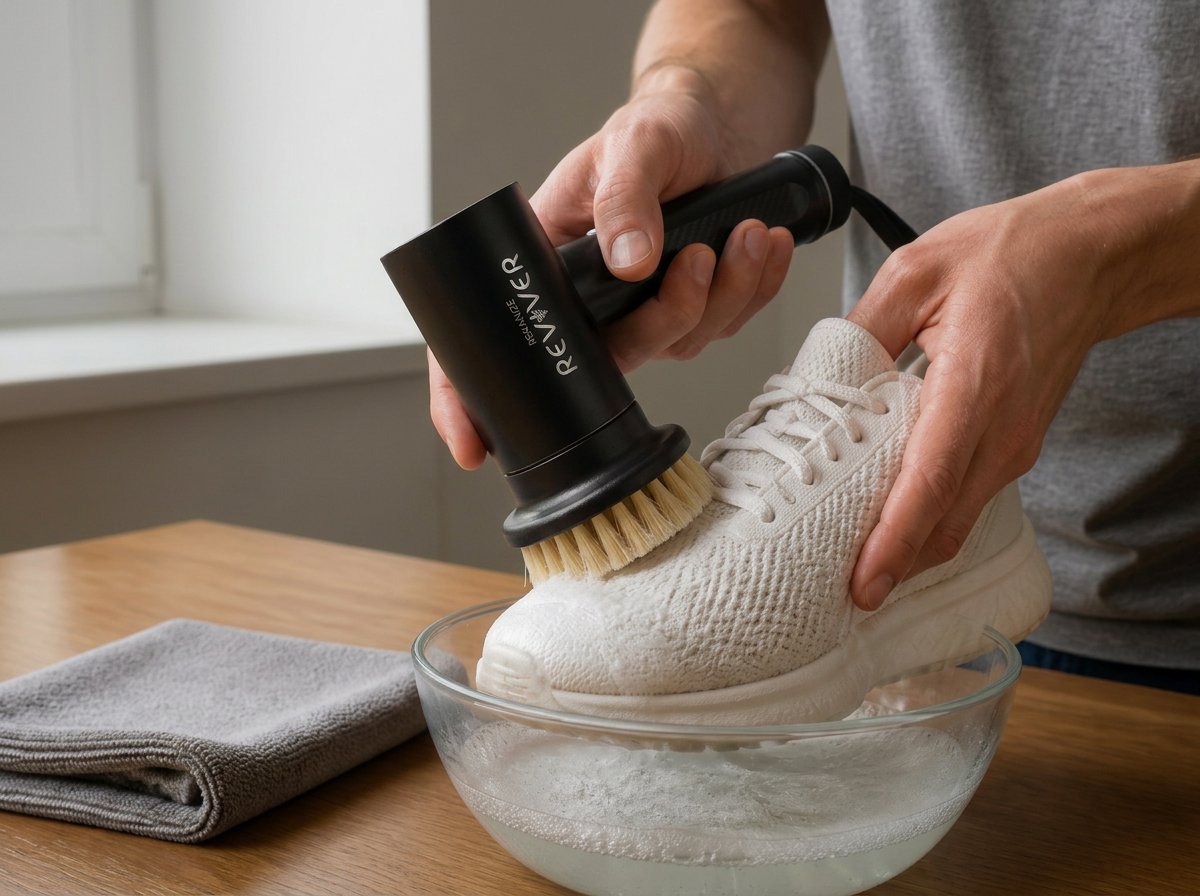
Pull the laces and insoles out first. Laces trap grit that scratches the mesh during cleaning, and insoles need separate handling. Brush off loose dirt with a dry soft brush before any water touches the shoe. Dry dirt lifts easily; wet dirt smears deeper into the weave.
Add a few drops of mild dish soap to a bowl of warm water. That is the whole recipe. A common mistake is over-concentrating the mix, which leaves residue behind. You want light suds, not a thick lather. Stir gently and keep a second bowl of clean cold water ready for rinsing.
Dip the soft brush in the soapy water and shake off the excess. Brush in one direction, following the grain of the mesh, with light pressure. Work in straight-line strokes rather than circles. Short, even passes lift dirt without pulling at the fibers. Rinse the brush often so you are not pushing dirt back in.
Dampen the microfiber cloth with clean cold water and wipe away the soap. Rinse the cloth and repeat until no suds remain. Soap residue is the quiet culprit behind discoloration and stiff mesh, so do not rush this step. Blot the surface dry with a clean towel when you are done.
White mesh shows every mark, and the fix depends on what the mark actually is. The table below matches the treatment to the stain type, but the real skill is in the order of operations and knowing when to stop.
|
Stain Type |
Safe Approach |
What to Avoid |
|---|---|---|
|
Loose dirt and dust |
Dry soft brush first, then soapy wash |
Wetting before brushing off grit |
|
Mud |
Let it dry fully, brush off, then spot clean |
Scrubbing while wet |
|
Grass and ground-in marks |
Mild detergent, gentle one-direction brushing |
Bleach or harsh chemicals |
|
Oil and grease |
Blot, apply a small amount of mild dish soap directly, work in, rinse |
Rubbing the stain outward or using hot water |
|
Yellowing |
Cold rinse, air dry away from sun |
Sun drying, which sets yellowing |
Every stain job starts the same way: let the shoe dry completely, then brush off loose material with a dry soft brush. Wet mud smears deeper into the weave, and wet grit acts like sandpaper under a brush. Dry first, then decide whether the mark needs a full wash or just a spot clean.
Treat stains as spot cleaning jobs. Dampen only the stained area, work a small amount of mild soap in with one-direction strokes, and rinse with a damp microfiber cloth until the suds are gone. Flooding the whole upper to fix one mark puts water into glued seams and slows drying, which is where most damage actually happens.
Do not escalate to a stronger product. Let the area dry fully, then repeat the same gentle pass. A second mild treatment beats one aggressive scrub every time, because the damage from harsh chemicals and hard brushing is cumulative and permanent. If a stain still will not lift after two gentle passes, the mark may be dye transfer or a set-in oil stain, in that case, stop and accept a slightly imperfect result rather than risk the fibers.
Reviver – Electric Sneaker Cleaning Brush →
Yellowing on white mesh is usually not dirt, it is oxidation and residue. Soap left in the weave, heat from drying, and sun exposure all accelerate it. The fix is a thorough cold rinse, a full air dry away from sunlight, and patience. Bleach makes yellowing worse by weakening the fibers and stripping any optical brighteners in the material.
The best brush for cleaning mesh shoes is a soft-bristle brush with natural fibers. Firm bristles belong on soles and rubber, not on mesh. A hard brush snags the weave and leaves a fuzzy surface that no amount of cleaning will fix.
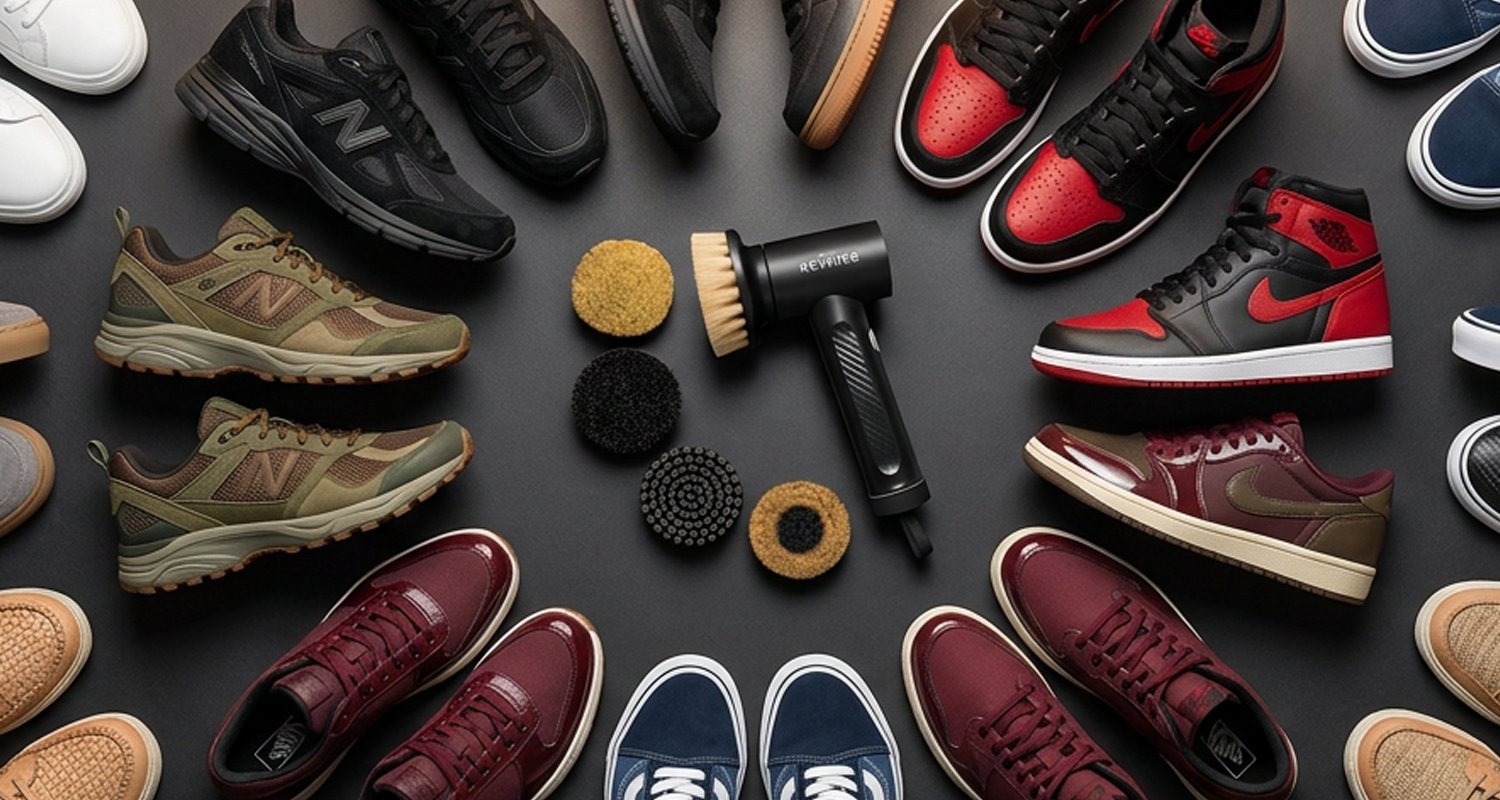
Our Reviver electric sneaker cleaning brush ships with four purpose-built 3-inch heads, including a natural-fiber soft brush for delicate surfaces and a firm scrub brush for tougher areas like outsoles. It runs at two controlled speeds, 140 RPM for lighter cleaning and 280 RPM for deeper work on durable areas. That control matters on mesh: you get consistent, gentle agitation without the hand pressure that causes damage.

Always test any brush on a small, inconspicuous area first.
Air drying is the only safe method for mesh sneakers, and how you dry matters as much as how you clean. Heat is the enemy here for two reasons: it weakens synthetic fibers, and it softens the adhesive that bonds the upper to the midsole. Once that glue softens and re-cures, you get separation at the sole, damage that no cleaning method can reverse.
Most pairs dry within a day in good airflow. Damp, cool rooms can stretch that to two days. If the shoe still feels damp inside, give it more time rather than reaching for heat.
If your mesh sneaker has leather, suede, or foam overlays, the mesh will usually dry faster than the trim. Leather can stiffen as it dries, and suede can spot. Keep those panels away from direct airflow and let the whole shoe dry slowly and evenly. If a leather overlay feels stiff after drying, a light conditioning pass restores flexibility, but only once the shoe is fully dry.
Most mesh damage comes from a handful of habits. Avoid these and your uppers will hold their shape and color far longer.
A little routine care goes a long way. Brush off dry dirt after each wear and spot clean marks right away, before they set.
Machine washing mesh sneakers is risky. The agitation can weaken mesh fibers, loosen glued seams, and cause discoloration. If you must, use a mesh laundry bag on a cold, gentle cycle with mild detergent, and never put them in the dryer. Hand washing is safer for preserving shape and structure, especially on limited-edition or white mesh sneakers.
A mix of mild dish soap or gentle laundry detergent and warm water works well for most mesh sneakers. Avoid bleach, hydrogen peroxide, alcohol, and harsh chemicals that can discolor or weaken fibers. Always spot test on a small hidden area first. For tough stains, a paste of baking soda and water can help lift dirt without damaging the mesh.
Stuff the sneakers with a towel or paper to hold their shape, then air dry them at room temperature away from direct sunlight and heat. Never use a dryer, radiator, or direct sun, which can warp the mesh and cause discoloration. Good airflow speeds drying. Rotate the stuffing halfway through if the shoes feel damp inside.
A soft-bristled toothbrush can work for small areas and tight spots, but it is not the best tool for full mesh panels. Toothbrush bristles can be too stiff and may fray or snag delicate mesh if you brush too hard. A soft natural-fiber brush or a dedicated mesh brush head is gentler and covers more area with less pressure.
Mesh sneakers reward patience, not force. The challenge is staying gentle when a stain is stubborn, and that is where the right tool earns its place. Rekanize built the Reviver electric cleaning brush to take the scrubbing effort out of the job, with two controlled speeds and four interchangeable heads, including a natural-fiber soft brush made for delicate mesh. Test it on a hidden area, work in one direction, and air dry. Get started with Rekanize and keep every pair looking sharp for years.
Buy a professional sneaker cleaning brush kit with confidence. Learn bristle types, kit contents, and material matching before you spend.
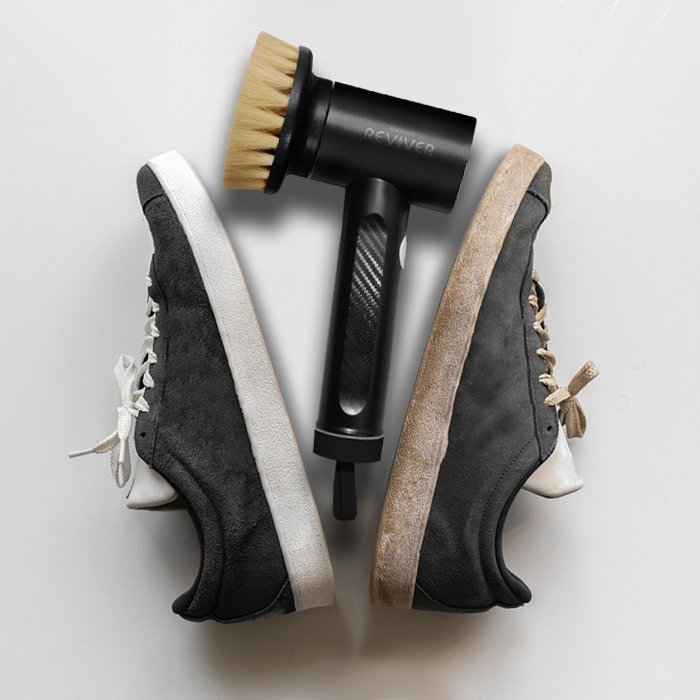
Electric sneaker brushes promise faster deep cleaning, but are they worth it for mesh and suede? Compare specs, safety, costs, and real trade-offs.
