


Can You Wash Sneakers in the Sink? A Practical Guide
Can you wash sneakers in the sink? Yes, with the right method: a gentle hand wash, a check of your materials, and a dry that keeps odor away.

Last Updated: November 7, 2026
Quick Summary
Clean expensive sneakers by wear count, not by the calendar. Wipe them down after every wear, deep clean every 2 to 8 wears depending on wear intensity, and treat rain, mud, or salt exposure immediately.
Knowing how often to clean expensive sneakers comes down to one shift in thinking: you clean expensive sneakers by wear, not by the calendar.
Premium uppers age faster than people expect. Dust grinds into knit. Sweat salts settle into leather. Mud dries in sole grooves and starts to crack.
A casual pair can survive a few skipped weeks. A limited-edition pair you plan to keep for years can’t.
A fixed “clean every Sunday” rule ignores how you actually wear your shoes. One person rotates five pairs. Another wears the same pair four days a week.
Count wears, not days. That’s the simplest way to build a schedule that fits your rotation.
A pair worn twice a month needs far less attention than one worn daily. Match the effort to the wear, and you stop over-cleaning delicate pairs while under-cleaning the ones that need it most.
A schedule only works if it accounts for how hard each pair actually works. Expensive sneakers rarely share the same wear pattern, so treat the table below as a starting framework and adjust by wear count, environment, and material.
| Wear Pattern | Quick Wipe | Deep Clean | Full Reset |
|---|---|---|---|
| Light, occasional wear (1-2 wears per month) | After each wear | Every 6-8 wears | Monthly |
| Regular, dry conditions (2-3 wears per week) | After each wear | Every 4-6 wears | Every 2 weeks |
| Heavy, daily wear (4+ wears per week) | After each wear | Every 2-3 wears | Weekly |
| Rain, mud, or salt exposure | Immediately | Within 24 hours | As needed |
| Deadstock or display-only pairs | Dust monthly | Only when visible soil appears | Seasonal inspection |
Treat this as a starting point, not a rulebook. Humidity, climate, and how much you sweat all shift the numbers. A pair worn in summer heat needs more frequent attention than the same pair worn in cool, dry weather.
Expensive sneakers change the math in two ways. First, the cost of a mistake is higher, so you clean less aggressively but more consistently. Second, resale and long-term appearance depend on avoiding over-cleaning as much as under-cleaning.
A few adjustments worth making:
These are two different jobs, and mixing them up is a common mistake.
A quick wipe-down takes a minute. You brush off loose dust, wipe the midsoles, and let the pair air out.
A deep clean goes further. You work the uppers, clean the laces and insoles, and address stains.
Watch out: over-cleaning leather and suede can dry out finishes and flatten nap as well.
Suede and nubuck need less frequent but more careful cleaning.
Water is the enemy here. Over-wetting suede can flatten the nap and leave water marks.
For a full walkthrough, see our guide on the best way to clean suede sneakers safely, which covers dry brushing, stain removal, and protection without damaging the texture.
A few rules for delicate materials:
Canvas and knit are more forgiving but still benefit from gentle tools. If you’re unsure, follow the manufacturer’s care instructions for that specific pair.
Material-specific care is the difference between a clean pair and a damaged one. Here’s how to match method to material.
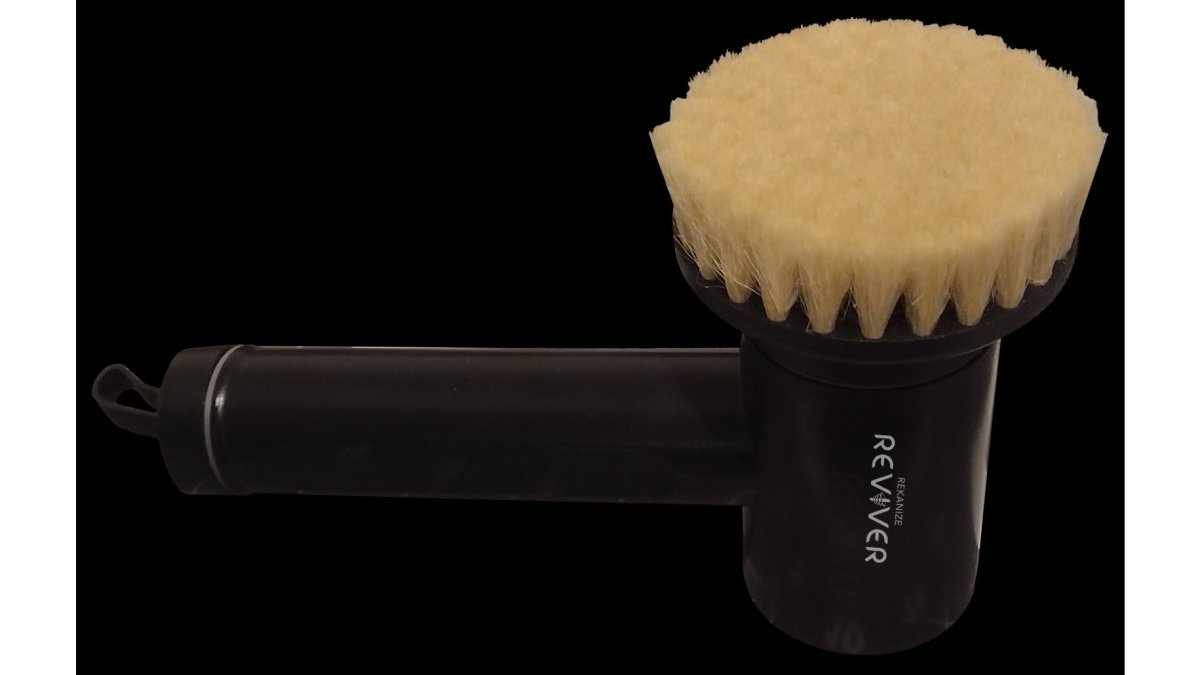
This is where Reviver’s four interchangeable brush heads help. The Soft natural fiber brush suits gentle cleaning on delicate surfaces. The Scrub brush suits tougher everyday buildup. The Sole brush is built for outsoles and other hard-wearing surfaces. The Suede brush is designed for suede and nubuck.
Always test on a small, inconspicuous area before cleaning the whole shoe.
Spot-cleaning is the fastest way to keep expensive sneakers presentable between deep cleans. It targets one mark at a time, so you don’t have to wash the whole pair over a single scuff.
Here’s the process:
For a quicker method, our guide on the fastest way to clean dirty sneakers breaks down a fast between-wash routine you can use right away.
Spot-cleaning is not a substitute for a deep clean. It buys you time between them.
Washing sneakers can ruin them if you use the wrong method for the material. The risk isn’t washing itself.
A few things that cause real damage:
Before you commit to a full wash, read our breakdown on whether an electric shoe brush works and what to know first.
The safer path for expensive pairs: clean by hand or with a controlled tool, use gentle solutions, and always air-dry.
Exposure to the elements calls for cleaning sooner, not later, but the right response depends on what the pair met. Rain, mud, salt, sweat, dust, and spills each behave differently, and treating them the same is how expensive pairs get damaged.
After rain, blot the uppers with a dry cloth, stuff the shoes with paper to hold their shape, and air-dry away from heat.
Leather and coated finishes handle rain best but still need attention. Wipe away standing water, let the pair dry naturally, and condition leather occasionally to keep the finish from cracking.
Watch out: drying near a radiator, heater, or in direct sun can warp glue and shrink materials.
After mud, let it dry completely first. Wet mud smears deeper into fabric. Once dry, brush off the bulk with a firm bristle brush, then spot-clean what’s left with a soft brush and mild solution.
Mud that has dried into sole grooves is worth clearing promptly. Left in place, it can crack and pull at the midsole edge over time.
Winter salt is one of the most underestimated threats to expensive sneakers. Salt stains leather, dulls finishes, and works into stitching. Brush off dry salt first, then wipe with a cloth dampened with a mild solution, and dry fully.
Everyday city dust and grime build up quietly. A quick wipe after each wear keeps that buildup from turning into a deep clean.
Sweat is a wear issue, not just a dirt issue. It settles into linings and insoles and feeds odor. Remove insoles after heavy wear, let them air separately, and rotate pairs so each has time to dry. For washable insoles, follow the manufacturer’s care instructions; for glued or leather-lined insoles, spot-clean rather than soak.
Blot spills immediately with a clean cloth, don’t rub, which pushes the stain deeper. For oil-based spills, blot first, then apply a small amount of suitable cleaner to a cloth rather than directly to the shoe, and work from the outside of the stain inward.
If a pair gets soaked, don’t rush the drying. Heat is the enemy. Air-dry, and check the materials before you wear them again. When a stain involves a material you’re unsure about, follow the manufacturer’s care instructions or consult a professional before proceeding.
A routine protects your collection better than any single clean. The goal is consistency, not intensity.
Here’s a simple routine to build:
Storage matters as much as cleaning. Keep pairs dry, out of direct sunlight, and away from heat.
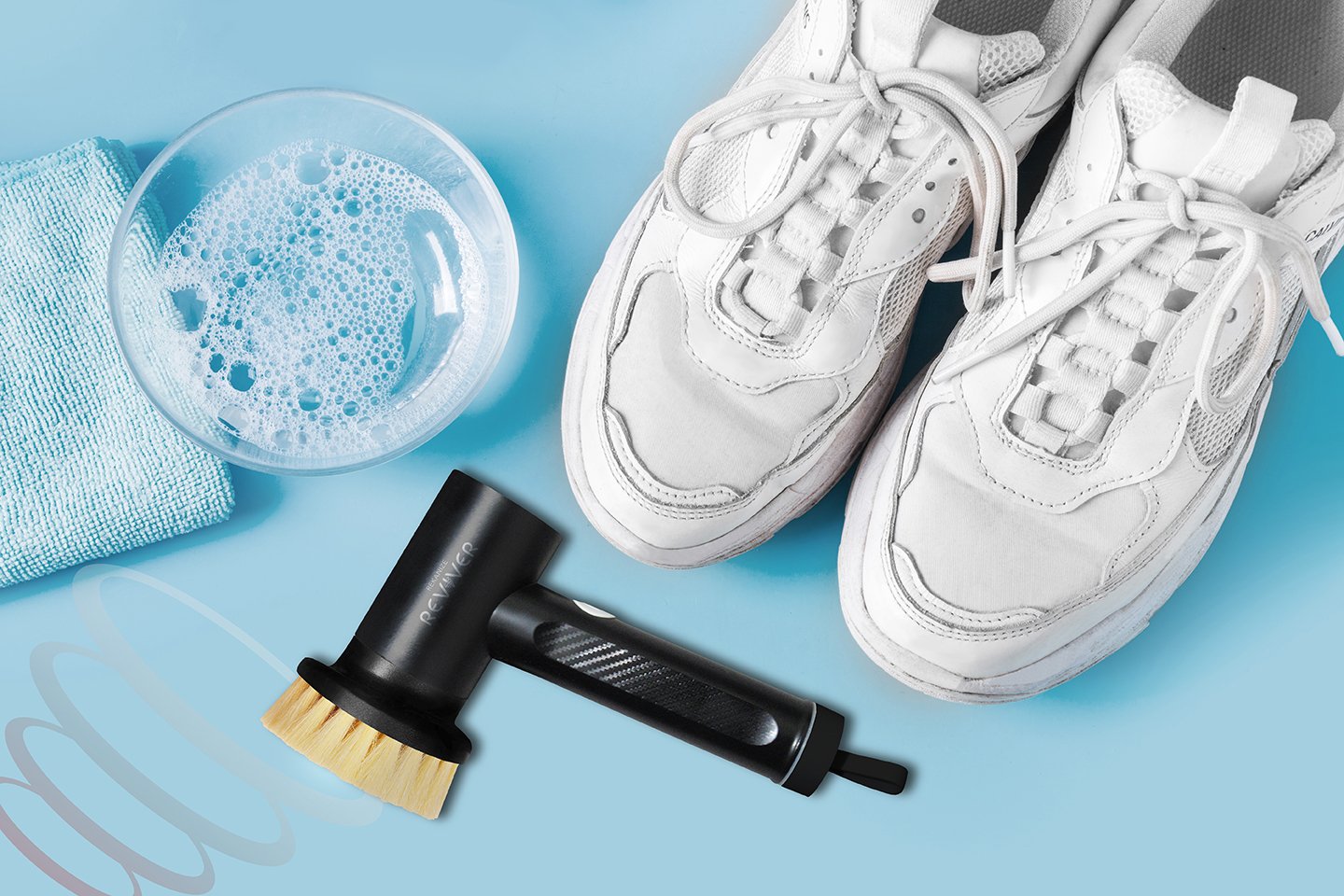
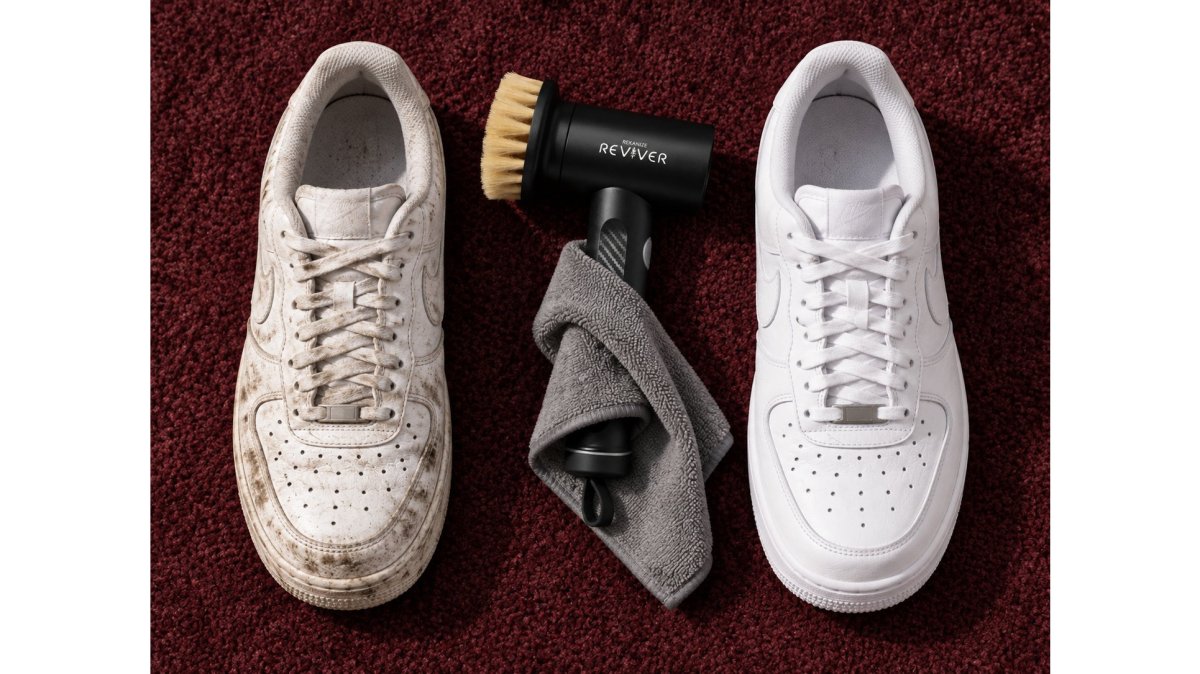
This is where a powered tool fits naturally. The Reviver electric sneaker cleaning brush does the scrubbing for you, with two controlled speeds and four brush heads built for different surfaces.

Cleaning frequency isn’t about being obsessive. It’s about protecting what you paid for.
Expensive sneakers reward owners who stay consistent. The right schedule, the right tools, and a little prevention go a long way.
Base it on wear count rather than the calendar. A light wipe-down after every two to three wears keeps dirt from settling. Do a full deep clean every 10 to 15 wears for everyday pairs, and every 20 to 30 wears for collectible sneakers that only come out occasionally. Pairs worn in rain, mud, or heavy dust need attention right away, not on the next scheduled date.
Suede needs less frequent but more careful cleaning than leather or canvas. Brush off loose dust after each wear and spot-clean marks as they appear. A fuller clean every 15 to 20 wears is usually enough. Avoid soaking suede, use a specialized suede brush, and let it air-dry away from direct heat. Always test any product on a hidden area first.
A washing machine can damage expensive sneakers. Heat and agitation can warp midsoles, loosen glue, shrink leather, and break down suede or knit uppers. Hand cleaning with a soft brush and controlled water gives you far more control over pressure and moisture. Check the manufacturer care instructions first, and skip the machine entirely for suede, leather, and limited-edition pairs.
Remove laces, brush off loose dirt, and apply a small amount of cleaning solution to a soft brush or microfiber cloth. Work in gentle circles on the stained area only, then wipe away residue with a damp cloth. Blot suede rather than scrubbing it. Test on a small hidden spot first, and let the shoe air-dry fully before wearing.
Can you wash sneakers in the sink? Yes, with the right method: a gentle hand wash, a check of your materials, and a dry that keeps odor away.
Learn how to clean dirty sneakers fast with a timed, material-safe method. Compare hand-cleaning, machine washing, and baking soda for quick results.
