


Can You Wash Sneakers in the Sink? A Practical Guide
Can you wash sneakers in the sink? Yes, with the right method: a gentle hand wash, a check of your materials, and a dry that keeps odor away.

Last Updated: November 4, 2026
Quick Summary
The fastest way to clean dirty sneakers is a timed four-step routine: dry-brush loose dirt for 2 minutes, match your cleaner to the material for 3 minutes, scrub uppers, midsoles and outsoles for 5 minutes, then rinse, wipe and air-dry for 5 minutes. That is about 15 minutes of active work, plus drying time you do not have to watch.
The fastest way to clean dirty sneakers is a timed, four-step routine that moves from dry prep to safe drying in about 15 minutes of active work. Most people lose time by scrubbing wet dirt and guessing at cleaners. Skip both and the job shrinks fast.
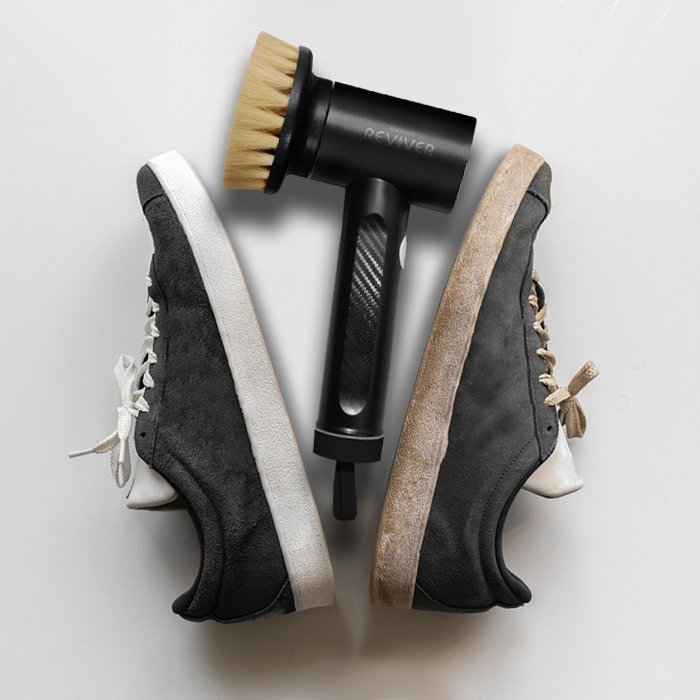
Below is the exact sequence, with a clock on each step. Follow it once and you will feel the difference.
Never start with water. Dry dirt turns into mud the moment it gets wet, and mud pushes deeper into mesh and knit. Knock the shoes together outside, then brush off loose dirt with a dry brush.
This is the step that decides whether the clean takes 15 minutes or ruins a pair. Leather, mesh, suede, and canvas each react differently to water and soap.
Mix a small amount of mild detergent with warm water for canvas and mesh. Use less water on leather. Keep suede dry and use a dedicated suede brush only.
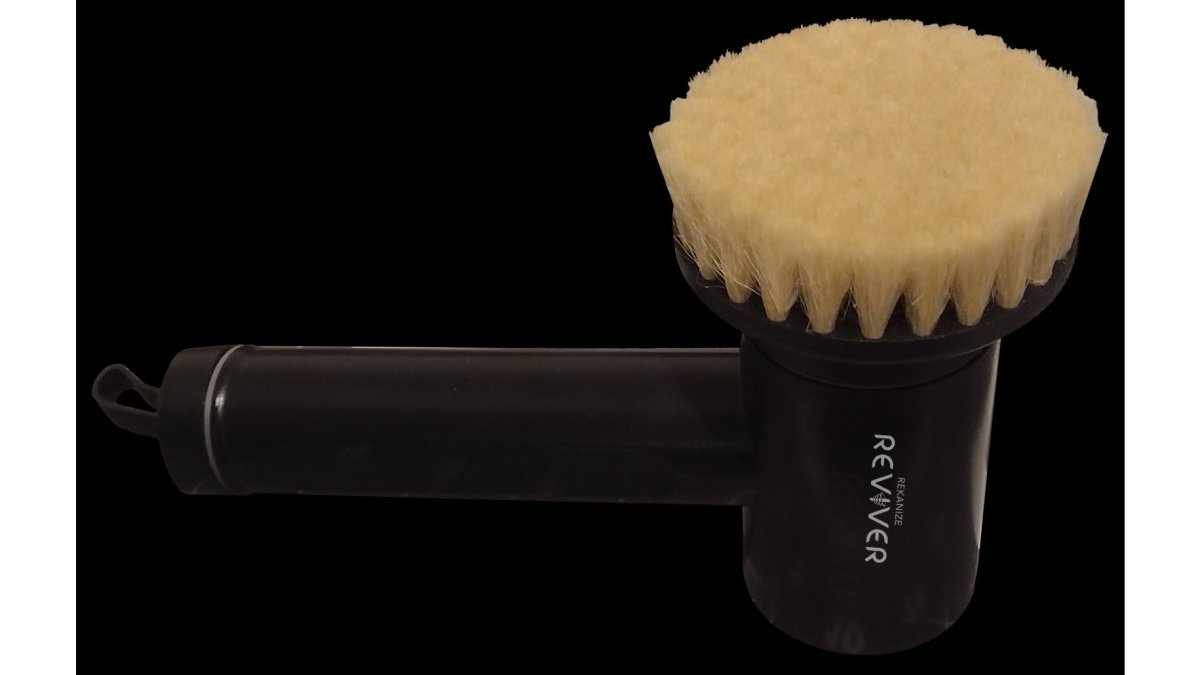
If you want a powered option that matches brush to material, you can explore Reviver’s four interchangeable brush heads.

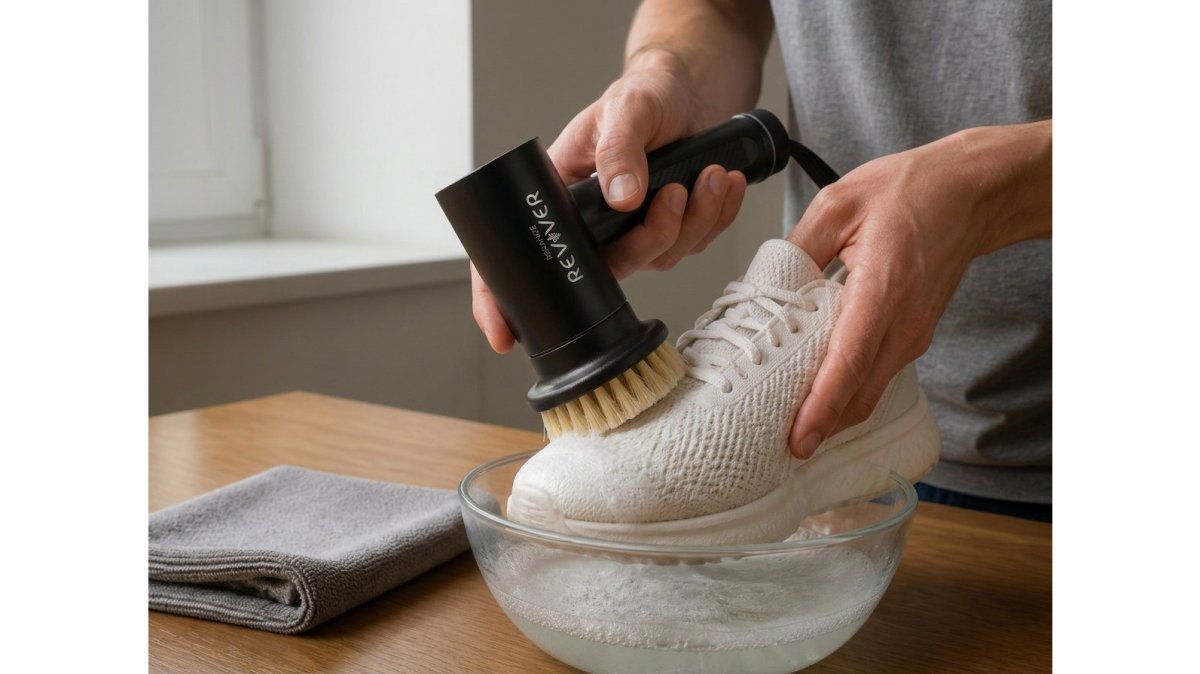
Scrub in small circles, one section at a time. Uppers first, then the midsole, then the outsole. Rinse your brush often so you are lifting dirt, not spreading it.
For soles and other hard-wearing areas, use a firmer brush. For mesh and knit, use a soft brush and light pressure. A common mistake is scrubbing delicate uppers as hard as rubber outsoles.
Wipe away soap with a clean damp cloth. Do not soak the shoe. Stuff the toes with paper towels to hold shape, then air-dry away from direct heat.
Never put sneakers on a radiator or in direct sun. Heat warps glue and can yellow white rubber. Most pairs dry in a few hours in a ventilated room.
| Step | Time | What You Do |
|---|---|---|
| 1. Prep and dry-brush | 2 min | Remove laces, brush off loose dirt |
| 2. Match cleaner | 3 min | Pick solution and brush for the material |
| 3. Scrub | 5 min | Uppers, midsole, outsole in small circles |
| 4. Rinse and dry | 5 min | Wipe soap, stuff toes, air-dry |
That is the whole routine. Fifteen minutes of active work, plus drying time you do not have to watch.
The fastest way to clean dirty sneakers without washing them is spot cleaning: treat only the dirty areas with a brush and a small amount of solution, then wipe and air-dry.
Spot cleaning wins for three reasons:
For light dirt, a soft brush and a damp cloth handle most of it. For tougher buildup on soles, step up to a firmer bristle brush.
Watch out: scrubbing a stain while it is still wet can spread it. Blot first, then brush.
A washing machine can suit some sneakers and damage others. The difference is construction, not brand.
Why the material matters: a washing machine works by agitation and water movement. That same motion that lifts dirt also works on adhesives and structured uppers.
If your pair qualifies, this is the sequence that keeps the cycle short and the risk low:
Watch out: a high-spin cycle is the most common cause of distorted uppers and separated soles.
Reviver – Electric Sneaker Cleaning Brush →
Drying is where machine washing actually loses time.
Realistic time budget: about 5 minutes of prep, a 30- to 45-minute cycle, and then a full day of drying. That is fast in active effort but slow in turnaround, which is why many collectors keep machine washing for canvas beaters and reserve spot cleaning for anything they plan to wear tomorrow. If you want the no-machine alternative, the spot-cleaning section above covers it.
Mesh is a material that is easy to damage if handled roughly. The safest approach is a soft brush, light pressure, and minimal water.
Skip the washing machine on older mesh. The agitation loosens glue and distorts the shape. If you want the full walkthrough, read our guide on how to clean mesh sneakers without damage.
Baking soda is commonly used in sneaker cleaning for two reasons: it is a mild abrasive, and it absorbs odor. Understanding those two jobs tells you exactly where it helps and where it backfires, a decision most guides skip.
Where baking soda works best:
Where baking soda backfires:
The paste method, with ratios: mix roughly three parts baking soda to one part water until it forms a thick paste, thin enough to spread, thick enough not to run. Apply only to the area you are treating, scrub gently with a firm-bristle brush, let it sit for 3 to 5 minutes, then wipe with a clean damp cloth and dry. Do not let the paste dry hard on the shoe; it becomes harder to remove and can leave a chalky film.
Watch out: baking soda is not a substitute for detergent on oily or greasy stains. It lifts surface grime and scuffs, but grease needs a surfactant to break it down.
For suede and nubuck, skip the baking soda entirely and follow a dry method, our guide on the best way to clean suede sneakers walks through the brush-and-eraser approach that protects the nap.
One brush does not fit every surface. This is where most cleaning routines slow down, because the wrong brush means repeated passes and uneven results.
Match intensity to material too. Light cleaning calls for a gentle pass. Tougher dirt on durable areas can take more pressure. Reviver’s two speeds, 140 and 280 RPM, give you control over cleaning intensity for lighter and tougher jobs. If you want a deeper look at brush types, our sneaker brush essentials guide breaks down which brush suits which surface.
Each of these adds passes, adds drying time, or both. Fix them and the clean gets faster without any new tools.
A fast clean is not about scrubbing harder. It is about order: dry prep, the right cleaner, the right brush, and safe drying. Get those right and a dirty pair takes minutes, not an afternoon.
The Reviver electric spinning brush is designed to reduce the repetitive hand scrubbing that slows this routine down.
If you want the routine to stick, our 7-step sneaker maintenance plan shows how to keep pairs clean between deep cleans.
A spot-clean takes about 10 to 15 minutes of active work. Dry-brush loose dirt, mix a small amount of mild detergent with warm water, and scrub the uppers, midsoles, and outsoles with a brush matched to each surface. Wipe away suds with a damp towel and air-dry away from direct heat. This method works for leather, suede, mesh, and knit, and it avoids the risk a washing machine poses to glued soles and delicate materials.
Sometimes, but not for every pair. Canvas and some knit sneakers can handle a cold, gentle cycle in a mesh laundry bag with laces and insoles removed. Leather, suede, nubuck, and shoes with glued or stitched soles should stay out of the machine. Check the manufacturer’s care instructions first. Machine washing also leaves shoes wet for longer, so air-dry them fully before wearing.
Use a soft brush and a small amount of mild detergent in warm water. Scrub the mesh in gentle circular motions, then wipe away suds with a damp towel. Avoid hot water and harsh chemicals, which can break down synthetic fibers. For stubborn stains, work in small sections and rinse the brush often. Never soak mesh shoes for long periods, and air-dry them stuffed with paper towels to hold their shape.
Baking soda works well as a mild abrasive and deodorizer for white rubber soles and canvas. Mix it with a little water or white vinegar to form a paste, scrub the area with a brush, and rinse. It is less effective on leather and suede, where it can leave residue or dry out the material. For tough stains, a dedicated sneaker cleaner or mild detergent is usually more reliable than a homemade paste.
Most sneaker owners do not need to clean more often. They need a faster, safer method when they do. Start with the timed workflow above, match your brush to the material, and let the tools do the scrubbing. Explore Reviver and keep your rotation clean with less effort.
Can you wash sneakers in the sink? Yes, with the right method: a gentle hand wash, a check of your materials, and a dry that keeps odor away.
Learn how often to clean expensive sneakers based on wear count, material, and conditions. Protect your collection with a routine that works.
