

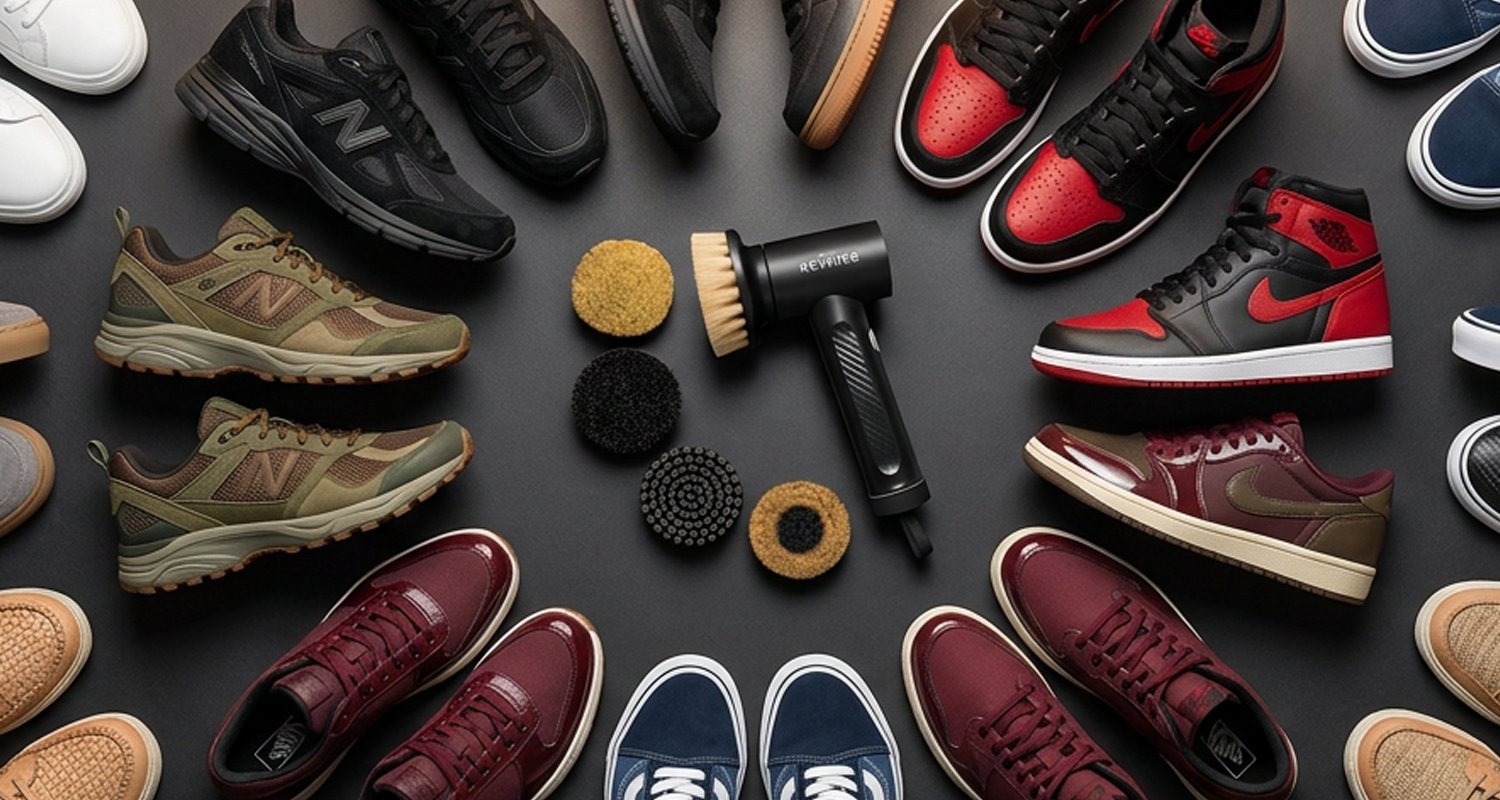
How to Buy a Professional Sneaker Cleaning Brush Kit
Buy a professional sneaker cleaning brush kit with confidence. Learn bristle types, kit contents, and material matching before you spend.

Last Updated: October 15, 2026
Electric sneaker brushes are cordless, rechargeable tools that spin a removable brush head against the shoe surface to loosen dirt, rather than relying on your wrist and elbow. At Rekanize, we built our Reviver brush around exactly that idea: two controlled speeds and four purpose-built heads instead of one aggressive spin.

Most buying guides rank these tools by battery life and RPM. That is backwards.
Here is the test that actually matters: can the device run slow enough for suede and soft enough for mesh? Get that wrong and you have spent money on a machine that damages the shoes you were trying to protect.
Below, we break down what you are really paying for, how to clean mesh and suede safely, and when your hands are still the better tool.
Manual brushing works, and nobody should pretend otherwise. A basic hand brush and a bowl of soapy water have cleaned sneakers for decades. What an electric brush buys you is consistency and time: the head does the scrubbing motion, so you are guiding rather than working. The trade-off is control. A spinning head applies force whether or not the material can take it, and that is the entire argument for buying one with a genuine low speed rather than the fastest motor you can find.
Most buying guides rank these tools by battery life and RPM. That is backwards. Here is what to compare side by side instead:
Purchase price is only the entry fee. The real cost per cleaning depends on how long the battery holds its charge, how often heads need replacing, and whether the motor survives regular use. A cheaper device with no replacement heads available becomes disposable the moment the bristles flatten. A device with a genuine low speed and a stocked head lineup keeps working for years. When you compare two units, divide the purchase price by the number of cleanings you expect before the heads wear out, then add the cost of replacement heads. That number, not the sticker, tells you which one is worth the money.
A powered brush is not safe on every surface. Skip it when the upper is patent leather, delicate knit, or has glued-on embellishments a spinning head can catch. Skip it on vintage or already-fragile pairs where hand cleaning gives you finer control. And skip it for a quick spot wipe on a clean pair, where a cloth is simply faster. The electric brush earns its keep on regular deep cleaning, muddy midsoles, and collections where you are cleaning several pairs in one sitting.
Mesh is the material people ruin most often, because it looks tough and is not. Woven mesh and knit uppers are thin, and a stiff bristle catches the threads and pulls them. The safe method is short and boring, which is the point:
For step 3, the best shoe cleaner for mesh shoes is a gentle, low-foaming solution applied to the brush rather than poured onto the shoe. Too much liquid soaks into the midsole and takes days to dry.
A powered brush does not change the chemistry of cleaning mesh. It changes the mechanics. Instead of your wrist driving the bristles back and forth, the head spins at a set speed and you control only pressure and direction. That is an advantage on flat mesh panels and a liability on seams, overlays, and loose weave.
The rule that matters: run the device on its lowest speed and keep the head moving. A spinning head held in one spot on mesh will abrade the weave faster than any hand brush, because the bristles keep striking the same threads.
A common pattern when people test both methods on the same stain is this: powered brushing removes surface dirt and dried mud noticeably faster, often in a fraction of the passes, because the spinning head covers more area per stroke. But on set-in stains that have bonded to the fibers, the powered head does not outperform a hand brush with the same solution. The stain needs dwell time and chemistry, not more agitation.
That is the practical takeaway: use the electric brush for the bulk of the dirt, then switch to a hand brush or cloth for the stubborn marks. Repeat the solution rather than increasing pressure.
Mesh uppers usually sit on a foam or rubber midsole with glued seams. A spinning head that catches a seam edge can lift it. Keep the head flat against the mesh, avoid running it along the seam line, and lift off before changing direction. If the mesh has a printed logo or heat-pressed panel, treat that area like suede: lowest speed, softest head, minimal passes.
Suede punishes speed. The material is leather with a raised nap, and aggressive brushing flattens that nap into a shiny, matte patch that will not come back easily.
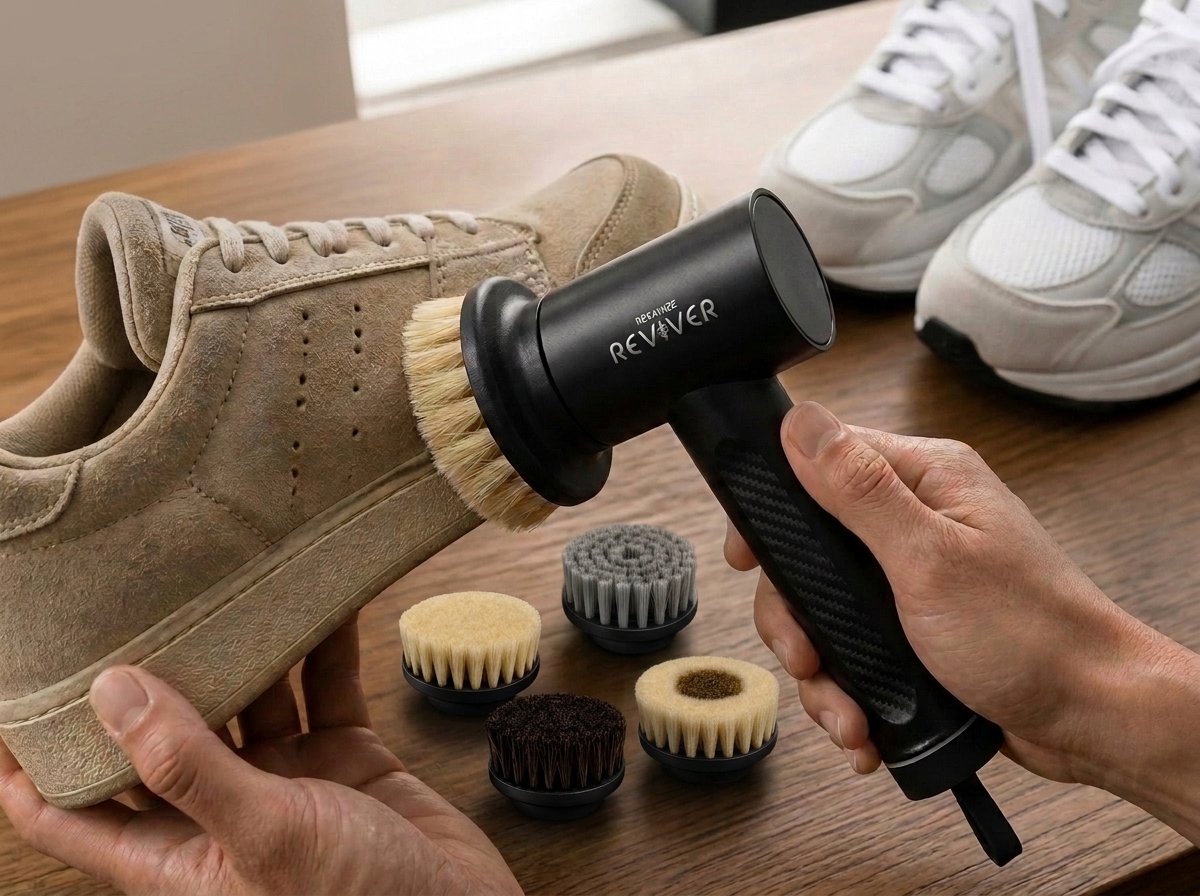
Start dry. Brush the entire shoe with a suede-specific head to lift surface dust and reset the nap before any liquid touches it.
When you do use a powered tool, run it on its lowest setting.
Reviver – Electric Sneaker Cleaning Brush →
Let the shoe dry fully, then brush the nap back up with the same suede head. That final pass is what restores the texture most people think is gone forever.
Bristle stiffness is the spec sheet nobody reads and everybody should. The best brushes for cleaning suede shoes use soft natural fibers, because the material cannot tolerate anything firmer.
Think of bristles in three tiers:
A brush that only offers one stiffness forces you to either under-clean your soles or over-clean your suede. That is the core argument for interchangeable heads on an electric sneaker brush: the device stays the same, the bristle changes with the material.
The best shoe cleaner for mesh shoes is a mild, low-residue solution you apply to the brush, not the shoe. Mesh holds liquid in its weave, and anything left behind dries into a visible ring.
Look for three things:
Apply a small amount to the brush head, work it in, and wipe with a damp cloth before it dries. Repeat for stubborn marks rather than scrubbing harder once.
Not every shoe wants a powered brush, and pretending otherwise is how people damage good pairs. Skip the electric tool when:
For those cases, a soft hand brush and patience beat any motor. The electric brush earns its keep on regular deep cleaning, muddy midsoles, and collections where you are cleaning several pairs in one sitting.
An electric sneaker brush is worth the money for people who clean often, own several materials, and want the job done faster with less wrist work.
The deciding factors are controlled speed and material-specific heads, not raw power. A device with one fast setting is a sole scrubber.
For most collections, the sensible setup is one cordless device with a soft head for mesh and knit, a suede head for nap, and a firm head for soles. That covers the shoes you actually wear.
Cleaning a rotation of mesh and suede without ruining either one comes down to control, and that is exactly what we engineered into the Reviver.
Yes, if the brush has a low-speed setting and a dedicated suede head. Suede needs gentle agitation to lift dirt without flattening the nap, so choose the lowest speed and a soft natural-fiber or suede-specific brush. Test on a small hidden area first, keep the brush moving, and avoid pressing hard. After cleaning, let the suede dry away from direct heat, then brush the nap back up once it is fully dry.
They are safe on mesh when you use a soft brush head and light pressure. Mesh is a woven textile, so stiff bristles or high speed can snag threads and cause pulls. Use the slower speed, keep the head flat against the surface, and work in short passes instead of grinding one spot. Always test on a small, inconspicuous area before cleaning the entire shoe, as material blends and coatings vary between models.
Suede needs soft bristles: natural fiber, horsehair, or a brush specifically labeled for suede and nubuck. Stiff bristles are for outsoles and other hard-wearing surfaces, not suede. A dedicated suede brush lifts dirt and restores the nap after cleaning. If you use an electric brush, pair the suede head with the lowest speed, and finish with a few dry passes to fluff the suede once it has dried completely.
A mild liquid cleaner applied to the brush, not poured directly on the shoe, works best on mesh. Foaming or diluted solutions let you control how much liquid soaks into the upper, which matters because mesh holds water and can stain if it dries unevenly. Use a soft brush head, work in small circles, and wipe away residue with a microfiber cloth. Rinse the brush head afterward so dried cleaner does not harden the bristles.
Buy a professional sneaker cleaning brush kit with confidence. Learn bristle types, kit contents, and material matching before you spend.
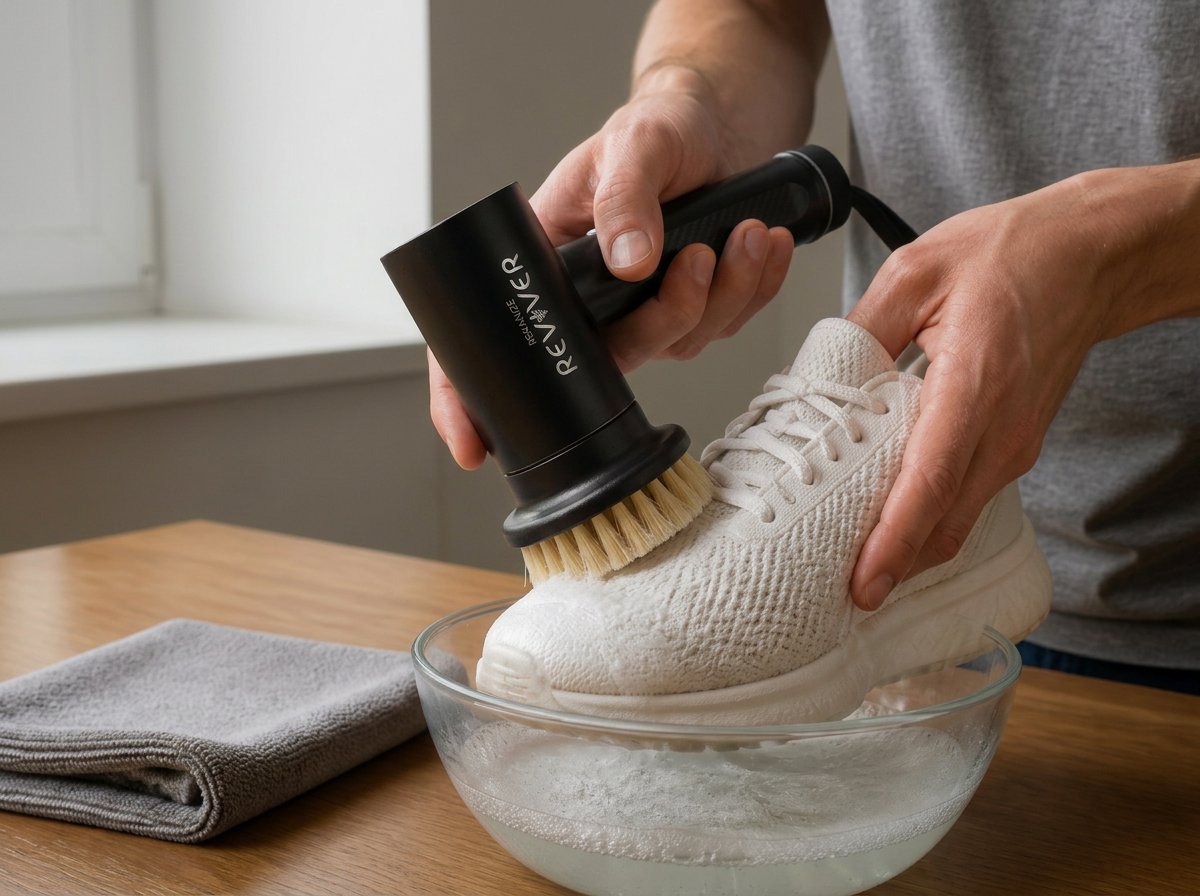
Learn how to clean mesh sneakers without damage using gentle tools, the right solution, and safe drying. Keep your mesh shoes fresh and intact.
