

Can You Wash Sneakers in the Sink? A Practical Guide
Can you wash sneakers in the sink? Yes, with the right method: a gentle hand wash, a check of your materials, and a dry that keeps odor away.

Last Updated: October 20, 2026
Professional sneaker cleaning at home comes down to four things: separating the shoe into parts, matching your method to the material, working from dry to wet, and drying with airflow instead of heat.
At Rekanize, we build footwear-care tools, so we think about where hand scrubbing breaks down. The answer is rarely “scrub harder”, it’s the right brush and pressure.
Here’s the workflow we’d run on any pair:
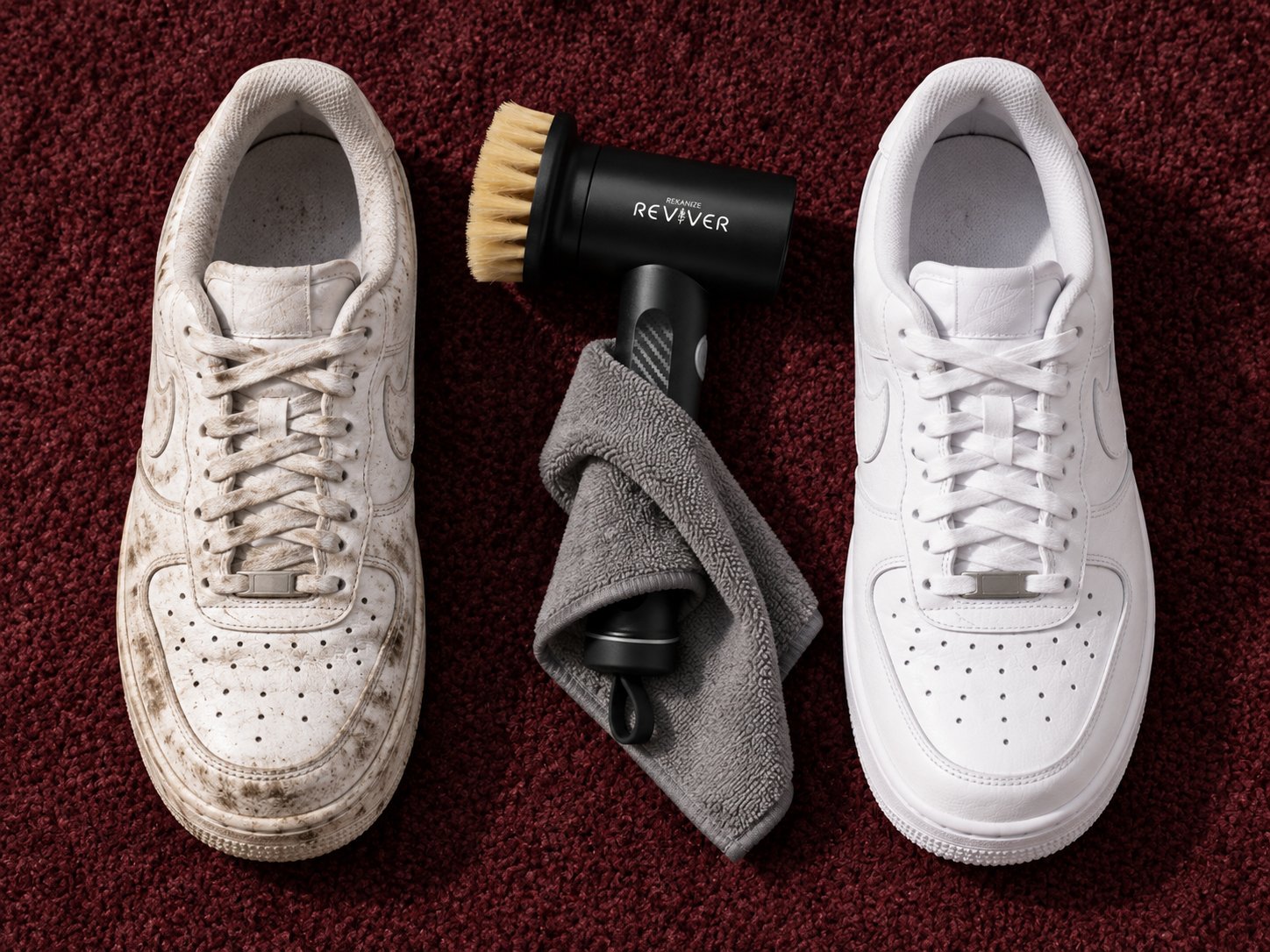
How long do sneakers take to dry after cleaning? Most pairs need 12 to 24 hours at room temperature with good airflow; humidity, thick padding, and leather push toward the longer end. Never use a radiator or hair dryer.
Suede and nubuck are the materials people fear most: water can stiffen the nap and leave a tide mark. Clean dry whenever you can, with a brush made for the material.
Start with a suede brush on completely dry shoes; short, light strokes lift dust and reset the nap. A suede eraser handles dry scuffs. For stains, apply suede-specific cleaner to the brush, not the shoe, and work in small sections.
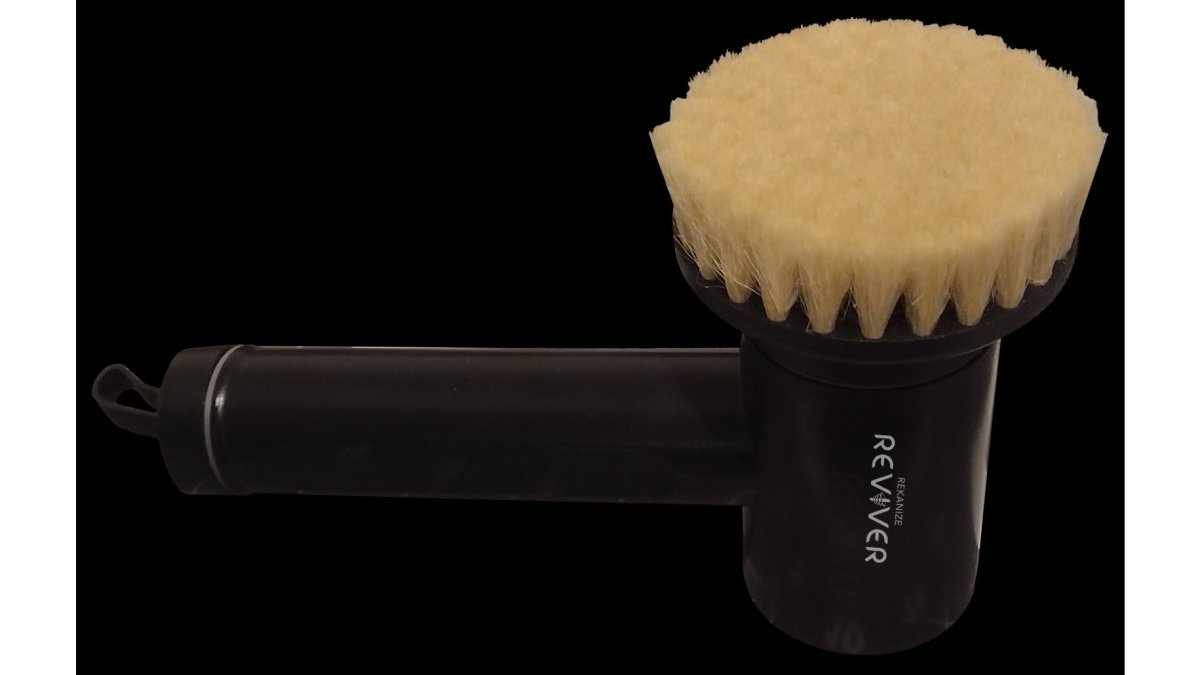
A powered tool helps here, but only at the lower setting. Reviver’s two speeds exist for exactly this reason: 140 RPM gives gentle agitation for delicate surfaces, while 280 RPM handles tougher dirt and hard-wearing areas like soles. Pair the lower speed with the Suede brush head for consistent motion without the uneven pressure of hand scrubbing.

Let suede dry fully away from heat, then brush the nap back into one direction. Skipping that final brush is why so many pairs look flat after cleaning.
A sneaker cleaning kit doesn’t need to be large, just four jobs: dry brushing, gentle upper cleaning, firm sole work, and material-specific care. Cover those and you can handle leather, canvas, mesh, knit, suede, and rubber.
Reviver – Electric Sneaker Cleaning Brush →
|
Kit Item |
What It’s For |
Why It Matters |
|---|---|---|
|
Soft brush |
Delicate uppers, light dust |
Prevents abrasion on knit and mesh |
|
Scrub brush |
Canvas, tougher buildup |
Removes embedded dirt without soaking |
|
Firm sole brush |
Outsoles, midsoles |
Handles hard-wearing surfaces |
|
Suede brush |
Suede and nubuck |
Lifts and resets the nap |
|
Microfiber cloths |
Wiping and drying |
Lint-free, absorbs excess moisture |
|
Mild cleaning solution |
General cleaning |
Dilute it; stronger isn’t better |
|
Shoe trees or paper |
Drying support |
Holds shape as the shoe dries |
That’s the logic behind Reviver’s four interchangeable heads: Soft in natural fiber for delicate surfaces, Scrub for everyday buildup, Sole with firm bristles for outsoles, and Suede with a specialized material for nap care. The 3-inch cleaning surface covers more area per pass, useful on long panels like a full leather sidewall.
For a homemade cleaner, a little mild dish soap in warm water handles most canvas and mesh jobs. Test first, keep it dilute, and don’t leave it on leather.
Most everyday dirt, scuffs, and odor are home jobs. Professional sneaker cleaning earns its place when risk outweighs reward: deep yellowing on vintage soles, dye transfer across panels, water damage on suede, or a pair with real resale or sentimental value. If unsure, clean the least visible area first and judge the result.
Always follow the manufacturer’s care instructions, and test any product on a small, inconspicuous spot first. Materials vary, and no single method suits every pair.
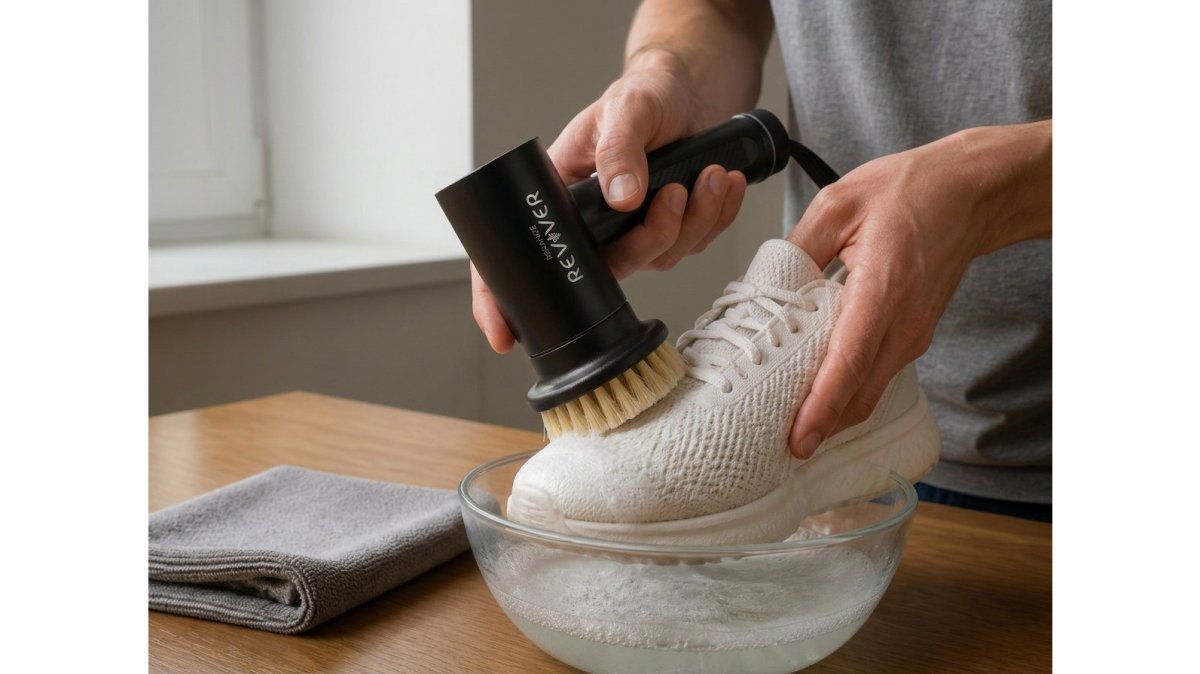
Work in order: remove laces and insoles, brush off loose dirt, then clean each component separately before air drying. The easiest method matches the tool to the surface rather than scrubbing everything the same way. A soft brush handles delicate uppers, a firmer brush takes on outsoles, and a dedicated suede brush lifts dirt from nubuck. Powered tools like the Reviver reduce hand scrubbing by doing the motion for you, with two speeds at 140 and 280 RPM so you can dial back intensity on delicate materials. Always test on a small, hidden area first.
Test colorfastness on an inconspicuous spot before cleaning the whole shoe, and never soak uppers in water. Use the gentlest brush that lifts the dirt, and keep pressure light on mesh, knit, and suede. Follow the manufacturer’s care instructions for the specific pair, since materials vary widely. For suede and nubuck, skip water-heavy methods and use a specialized brush. On leather, wipe rather than scrub. The goal is controlled cleaning, not aggressive cleaning, which is why adjustable intensity matters on delicate footwear.
Most sneakers need roughly 12 to 24 hours to air-dry fully, depending on material and how wet they got. Stuff the toes with paper towels to hold shape and draw out moisture, and replace the paper once it feels damp. Keep pairs out of direct sunlight and away from radiators or dryers, since heat can warp glue and crack leather. Canvas and mesh dry faster than leather or suede. Check insoles and the interior before wearing, and never put damp sneakers back in a closed box.
Keeping a rotation clean is mostly about consistency, not intensity. A quick pass after each wear beats a deep clean once a season. If you want to cut the hand scrubbing out of that routine, explore Reviver and see how two speeds and four purpose-built brush heads fit the way you actually clean.
Can you wash sneakers in the sink? Yes, with the right method: a gentle hand wash, a check of your materials, and a dry that keeps odor away.
Learn how often to clean expensive sneakers based on wear count, material, and conditions. Protect your collection with a routine that works.
