

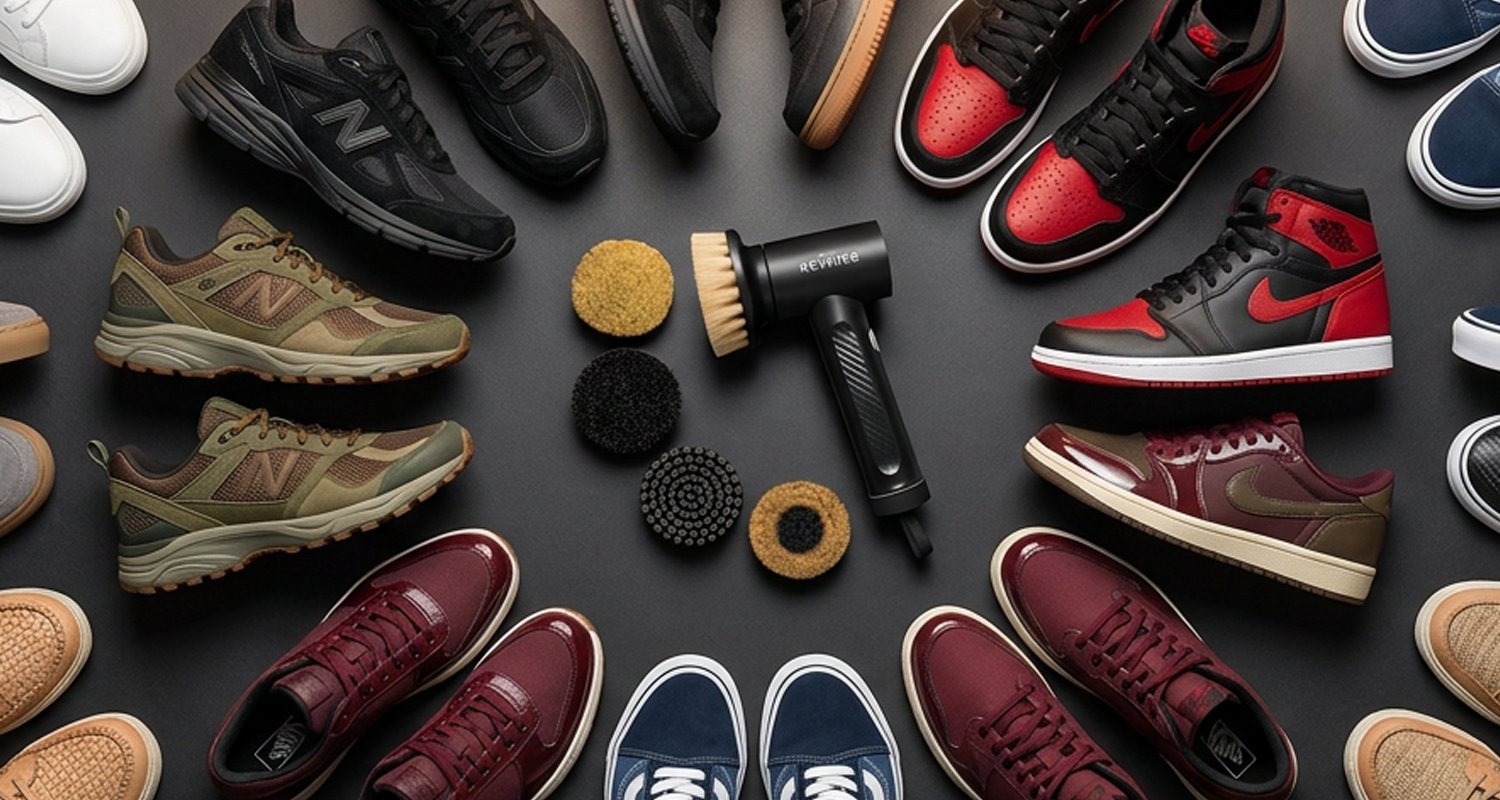
How to Buy a Professional Sneaker Cleaning Brush Kit
Buy a professional sneaker cleaning brush kit with confidence. Learn bristle types, kit contents, and material matching before you spend.

Last Updated: October 15, 2026
Ask most sneakerheads what matters in an electric sneaker cleaning kit and they’ll say power. That’s the wrong answer. Speed control is what protects your collection. A motor that spins at one aggressive setting will chew through mesh and lift suede nap before you notice the damage. A motor with two controlled speeds lets you match intensity to material, which is the entire point of going electric.
This guide from Rekanize breaks down what actually separates a good kit from a bad one, how to clean white sneakers without yellowing them, and which mistakes quietly ruin pairs. Below, we’ll show you exactly how to evaluate a motorized shoe cleaner brush kit before you spend anything.
The best electric sneaker cleaning kits in 2026 share three traits: adjustable speed, material-specific brush heads, and a cleaning surface wide enough to cover real ground. Everything else is marketing.
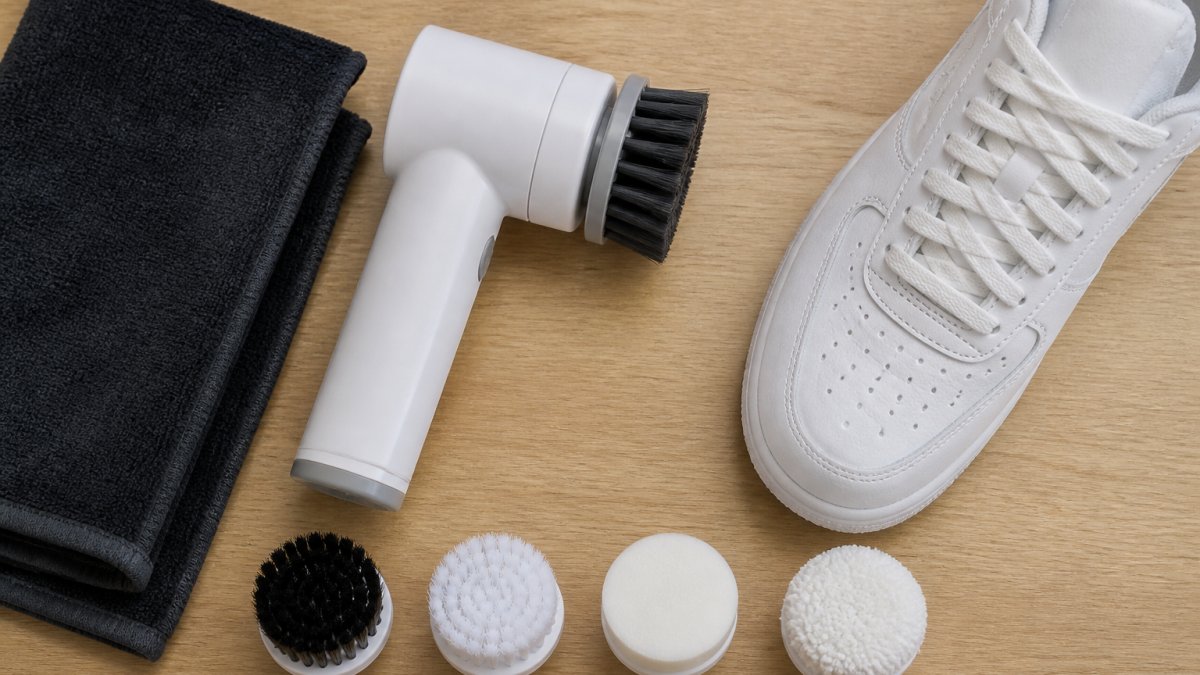
Two speeds beat one fast speed every time. Lower RPM handles delicate surfaces and light everyday dirt. Higher RPM tackles deeper grime and durable areas like outsoles.
Our Reviver brush runs at 140 RPM and 280 RPM for exactly this reason. The slower setting exists because faster isn’t always better. Spin a stiff bristle head at full speed across knit or suede and you’ll fray fibers that no cleaning solution can restore.

Four brush heads cover more ground than one universal head ever will. A natural fiber soft brush handles delicate surfaces and light dust. A horsehair scrub brush takes on tougher dirt and everyday buildup. Firm bristles belong on outsoles and other hard-wearing areas. A suede brush lifts and revitalizes nap without crushing it.
If a kit ships with one head, it’s a single-purpose tool wearing a multi-purpose label.
A cordless electric sneaker cleaning brush should solve three problems: reach, control, and coverage. Check these before anything else:
Battery life matters less than charging convenience. A USB-C port means you can top up from a laptop or power bank between wears. Grip matters more than most buyers expect: a wet hand on a smooth handle slips, and a slip at 280 RPM sends the brush into the upper.
Surface size is the quiet time-saver. A wider head means fewer passes over the same panel, which is where the real minutes add up.
The fastest way to clean white sneakers is a controlled, low-to-mid speed pass with the right head, working top to bottom. Here’s the sequence we recommend:
Heat is the enemy of white uppers. Skip the dryer and skip direct sunlight, both yellow the midsole over time.
Suede needs a different approach than leather or canvas, and the brush matters more than the solution. Use a specialized suede brush designed to lift and revitalize nap, and keep the motor on the lowest setting.
Never soak suede. Water spots suede permanently, and over-wetting collapses the nap into a flat, shiny patch. Brush dry, brush light, and let the suede brush do the lifting.
For leather, canvas, cotton, knit, and mesh, a soft natural fiber head at low speed handles most jobs. Suede and nubuck are the exception, not the rule, which is why a four-head system beats a one-head kit for anyone with a mixed rotation.
Reviver – Electric Sneaker Cleaning Brush →
Most sneaker damage during cleaning comes from three habits, and all three are avoidable.
Over-wetting. Saturation weakens adhesives and causes yellowing on white midsoles. Damp brush, damp towel, done.
Using one brush for everything. A firm bristle head on knit or mesh pulls threads. Match the head to the material every single time.
Skipping the dry pass. Going straight to a wet brush grinds loose grit into the upper like sandpaper. Dry brush first, always.
A quick reference for what goes wrong and how to correct it:
| Mistake | What Happens | The Fix |
|---|---|---|
| Full-speed scrubbing on mesh | Frayed threads, stretched knit | Drop to the low speed setting |
| Soaking suede | Water spots, flattened nap | Brush dry with a suede head only |
| Skipping the dry pass | Grit ground into the upper | Dry brush before any moisture |
| Stiff bristles on leather | Scuffed, dull finish | Switch to the soft natural fiber head |
| Drying near heat | Yellowed midsoles, cracked glue | Air dry at room temperature |
Electric wins on time and consistency, but the gap is smaller than the marketing suggests. A manual brush works fine on a single pair with light dirt. The advantage shows up across a collection.
Here’s the honest math. A manual brush requires you to apply pressure and motion for every pass, on every panel, on every pair. An electric brush applies the motion for you, so your only job is steering. On a deep clean with multiple pairs, that difference compounds.
Where manual still wins: quick spot touch-ups on a single scuff, or cleaning a pair you can’t risk on any motorized head. For everything else, a cordless electric brush with two speeds and swappable heads cuts the effort substantially.
The real challenge isn’t finding a brush that spins. It’s finding one that spins at a speed you control, with heads built for the materials you actually own. That’s the difference between a tool that maintains your collection and one that quietly damages it.
At Rekanize, we built Reviver around that idea: 140 and 280 RPM for matched intensity, four purpose-built 3-inch brush heads covering leather through suede, and cordless USB-C charging so it’s ready when you are. It takes the hard work out of sneaker cleaning and keeps the pairs you care about looking sharp.
Shop Rekanize and give your collection the care it deserves.
Yes, when the brush matches the material and you use the lower speed on delicate surfaces. An electric sneaker cleaning brush with controlled speeds, like 140 and 280 RPM, lets you drop to the gentler setting for mesh, knit, or leather and save the higher speed for outsoles and heavy dirt. Always test on a small, inconspicuous area first, keep the brush moving instead of holding it in one spot, and avoid pressing hard.
Only with a brush head made for it. Suede and nubuck need a specialized brush and the lowest speed setting to lift dirt without flattening the nap. A general scrub brush will rough up the surface. If your kit does not include a suede head, clean suede by hand with a soft brush and spot-treat stains instead of running the electric tool over it.
At minimum: a cordless, rechargeable handle with at least two speed settings, a soft brush for delicate surfaces, a firmer scrub brush for everyday buildup, and a stiff sole brush. A suede brush is a strong bonus if you own nubuck or suede pairs. Interchangeable heads matter more than raw power, because sneakers mix leather, mesh, knit, and rubber on a single shoe.
For regular cleaning, yes. The spinning action does the scrubbing, so you spend less time and effort per pair, which matters if you rotate several sneakers a week. A manual brush still works for quick touch-ups and for very delicate materials where you want total control. Many collectors keep both: electric for deep cleans, manual for spot work.
Buy a professional sneaker cleaning brush kit with confidence. Learn bristle types, kit contents, and material matching before you spend.
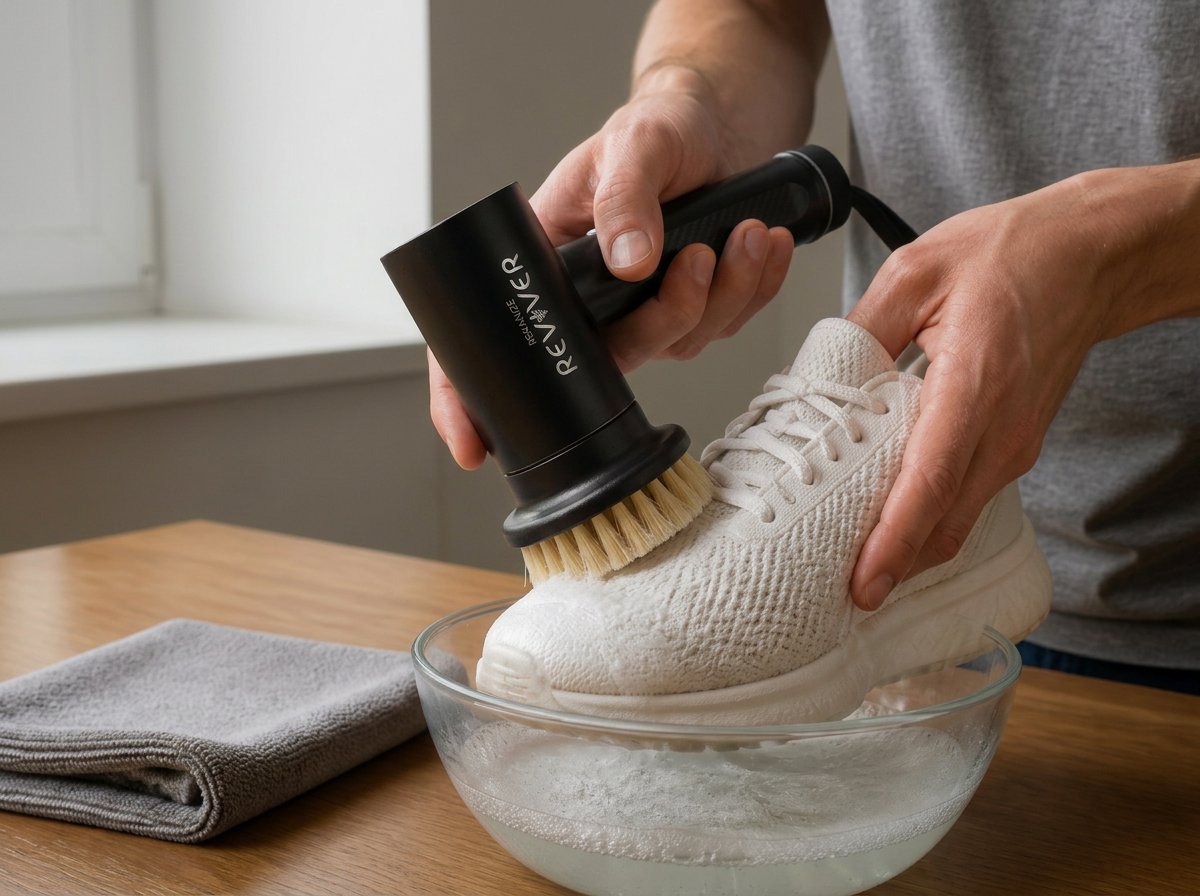
Learn how to clean mesh sneakers without damage using gentle tools, the right solution, and safe drying. Keep your mesh shoes fresh and intact.
