


Can You Wash Sneakers in the Sink? A Practical Guide
Can you wash sneakers in the sink? Yes, with the right method: a gentle hand wash, a check of your materials, and a dry that keeps odor away.

Last Updated: October 30, 2026
Quick Summary
Keep white knit sneakers clean by spot cleaning stains instead of washing the whole shoe, using a soft-bristled brush with light pressure and a mild detergent diluted in cool water. Rinse by dabbing with a damp microfiber cloth until no suds remain, then air-dry stuffed with plain white paper away from heat and sunlight.
White knit sneakers look sharp until the first scuff, and then the panic sets in. Knit is a textile upper, not a flat surface, and it traps dirt deep in the yarn loops where a quick wipe can’t reach. People often scrub hard, the fabric pills, and the shoe ends up looking worse than before.
The fix starts with understanding what you’re cleaning.
Knit is a looped yarn structure with stretch and give. Mesh is an open weave built for airflow, so dirt passes through the gaps and settles underneath. For the full method, see how to clean mesh sneakers without damage.
That matters because pressure and water behave differently on each. Knit stretches when wet and can lose shape if you scrub too hard.
The care label is the first thing to check, not the last. It tells you whether the shoe tolerates water, whether the manufacturer recommends spot cleaning only, and whether the upper is a non-washable material. Follow it. When the label is missing or unclear, test every cleaner on a hidden patch first.
Start dry. A dry brush lifts loose dirt, dust, and grit before any water turns it into mud that sinks into the yarn. Skip this step and you’re pushing grit deeper with every pass.
Work top to bottom so loosened dirt falls away from clean areas. Keep the pressure light. You’re lifting, not scrubbing.
Spot cleaning beats a full wash almost every time on white knit. Treat the stain, not the whole shoe, and you cut the risk of water marks, shape loss, and cleaner residue wicking through the yarn. But before any cleaner touches a visible area, run a patch test, and run it properly.
A patch test on knit is not a single dab. The goal is to confirm two things: that the cleaner won’t discolor the white, and that it won’t damage the fiber structure.
If any of those appear, dilute further or switch cleaners. White knit hides a lot until it doesn’t, a faint cast on a hidden patch becomes a visible ring on the toe box.
Three household options cover most stains, but they are not interchangeable:
Skip bleach, oxygen boosters with unknown dye content, and harsh solvents. On white knit they can yellow the fiber or weaken the yarn over repeated use.
Match the method to the mess. The wrong approach doesn’t just fail, it can set the stain deeper into the loops.
| Stain | Treatment | Why It Matters on Knit |
|---|---|---|
| Mud | Let it dry fully, then dry brush | Wet mud pushes grit into the yarn loops |
| Grass | Dab with diluted mild detergent | Scrubbing spreads the green pigment sideways through the knit |
| Oil or grease | One drop of dish soap, work gently, blot | Over-soaping leaves residue that attracts dirt |
| Coffee or tea | Blot immediately, then baking soda paste | Hot water can set the tannins; cool water only |
| Scuffs | Soft brush and a light mist of water | Hard pressure pills the knit surface |
| Yellowing | Rinse residue fully, air-dry out of sun | Yellowing is usually residue or UV, not dirt |
Dab, don’t rub. Rubbing stretches wet knit and pushes the stain sideways into neighboring loops. Work from the outside of the stain inward so you don’t spread it.
This is where white knit sneakers are won or lost. Scrubbing too hard pills the surface, rinsing too little leaves residue that yellows, and drying wrong shrinks or warps the upper. Each step has a target, hit it and the shoe keeps its shape and color.
Damp, not soaked. The upper should feel cool and slightly heavy, never squishy or dripping. If you can press a microfiber cloth to the knit and see water transfer, you’ve gone too far.
Why it matters: knit yarn absorbs water into the fiber itself, not just the surface. Over-wetting swells the yarn, loosens the loop structure, and slows drying, which is when odor and mildew start.
Reviver – Electric Sneaker Cleaning Brush →
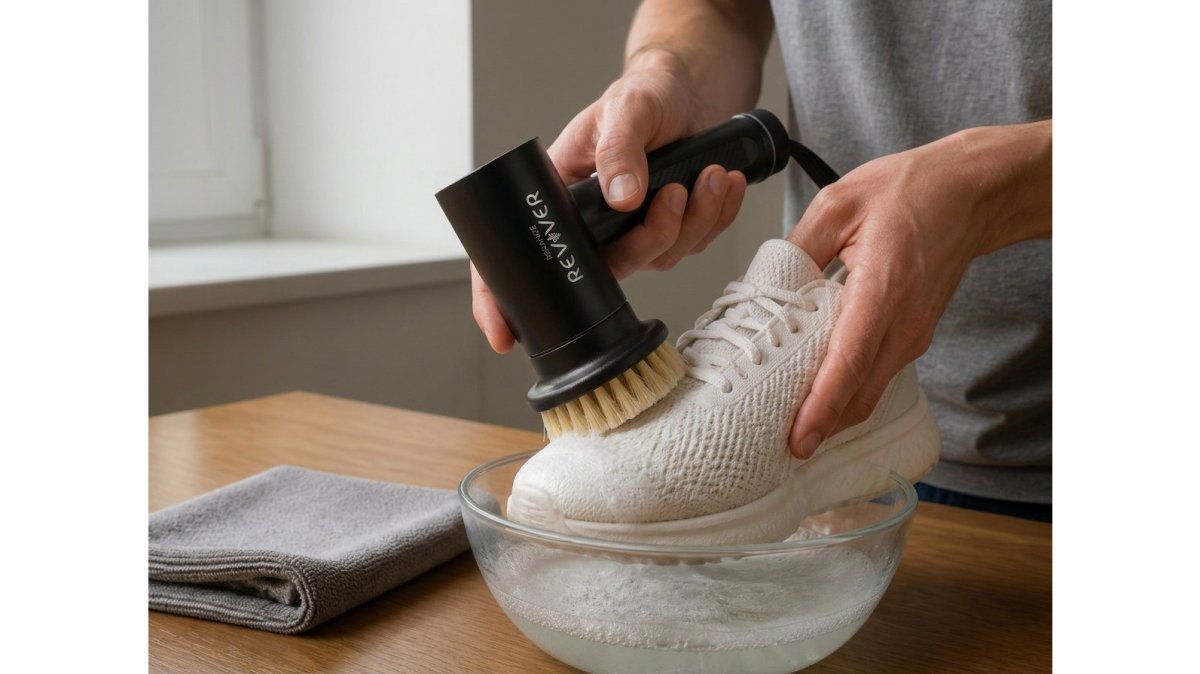
If hand scrubbing is tiring or uneven, a powered tool with a soft head and a low speed setting can reduce the repetitive motion, but the same rules apply: light pressure, short passes, and a patch test first. For a closer look at using an electric brush on delicate sneaker materials, that guide covers safe cleaning on sensitive uppers.
Rinse by dabbing with a clean, damp microfiber cloth, folding to a fresh face every few passes. Repeat until the cloth picks up no more suds. Residue is the most common cause of yellowing on white knit, so this step is not optional, it’s the difference between clean and clean-looking.
Shape retention during drying is the step most people skip.
Heat is the enemy. Direct sun and radiators can yellow white fabric and warp the shape as the knit dries unevenly. Never store a damp shoe, trapped moisture causes odor and can break down adhesives over time.
Most knit sneakers should not go in a washing machine. Agitation stretches the upper, the drum can distort the shape, and heat from a dryer cycle is worse. If the care label explicitly allows machine washing, follow it exactly, bag the shoes, use cold water, and still air-dry. When the label is silent or says spot clean only, hand cleaning is the safer path.
The right kit for knit is small: a soft-bristled brush, a microfiber cloth, a mild cleaning solution, and something to hold shape while drying. If you’re building that kit from scratch, this sneaker brush essentials guide explains which brushes and tools suit knit fabric. That’s it. The best tools for cleaning sneaker knit fabric are the ones gentle enough not to pull the yarn.
A few rules of thumb:
Preventing yellowing on white knit sneakers comes down to three habits: rinse cleaner fully, dry out of sunlight, and never store damp shoes. Leftover detergent and sun exposure are the two biggest causes of that dull yellow cast.
A few more preventive care moves:
Regular cleaning beats rescue cleaning. A five-minute weekly wipe keeps white knit looking fresher far longer than an occasional deep scrub.
Clean white knit sneakers every one to two weeks with a light wipe, and do a deeper clean every one to two months depending on wear. That cadence keeps dirt from working into the yarn and protects the shape over time.
Rotation matters as much as cleaning. Give each pair a rest day so moisture dries out fully. Check the care label for material-specific limits, and follow guidance from textile care guidance from the American Cleaning Institute when you’re unsure about a fabric or cleaner.
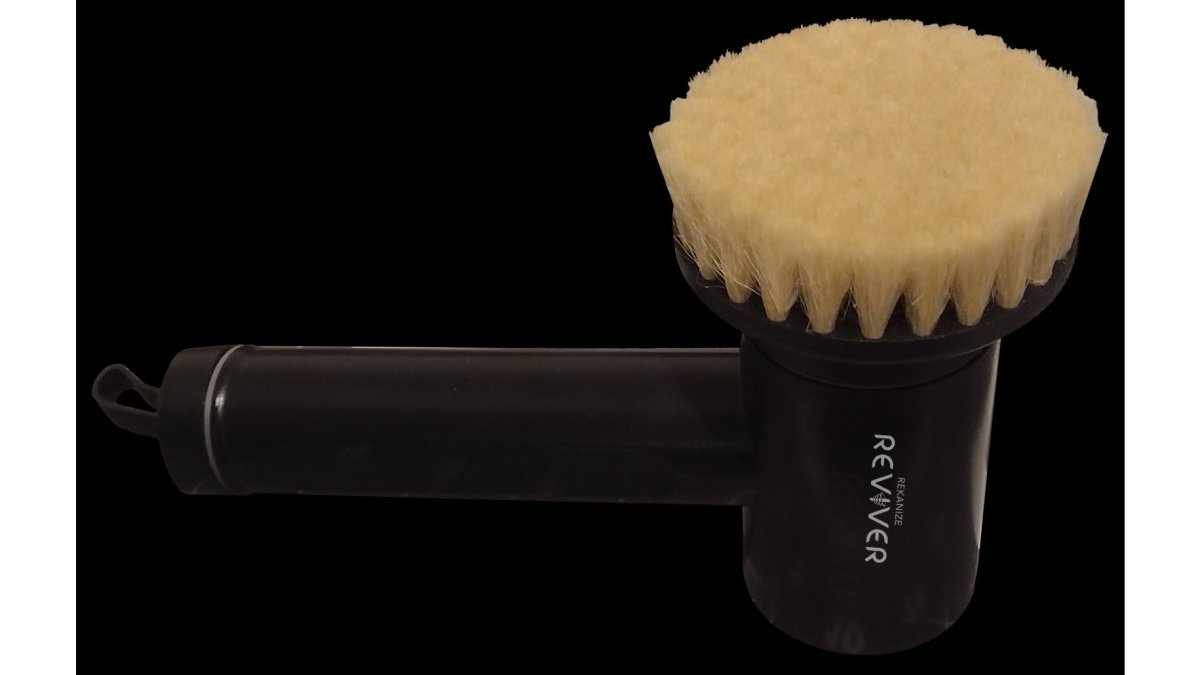
Maintaining white knit sneaker fabric is mostly about consistency and control. Powered cleaning helps on both fronts. The Rekanize Reviver is an electric sneaker cleaning brush built for exactly this kind of routine.

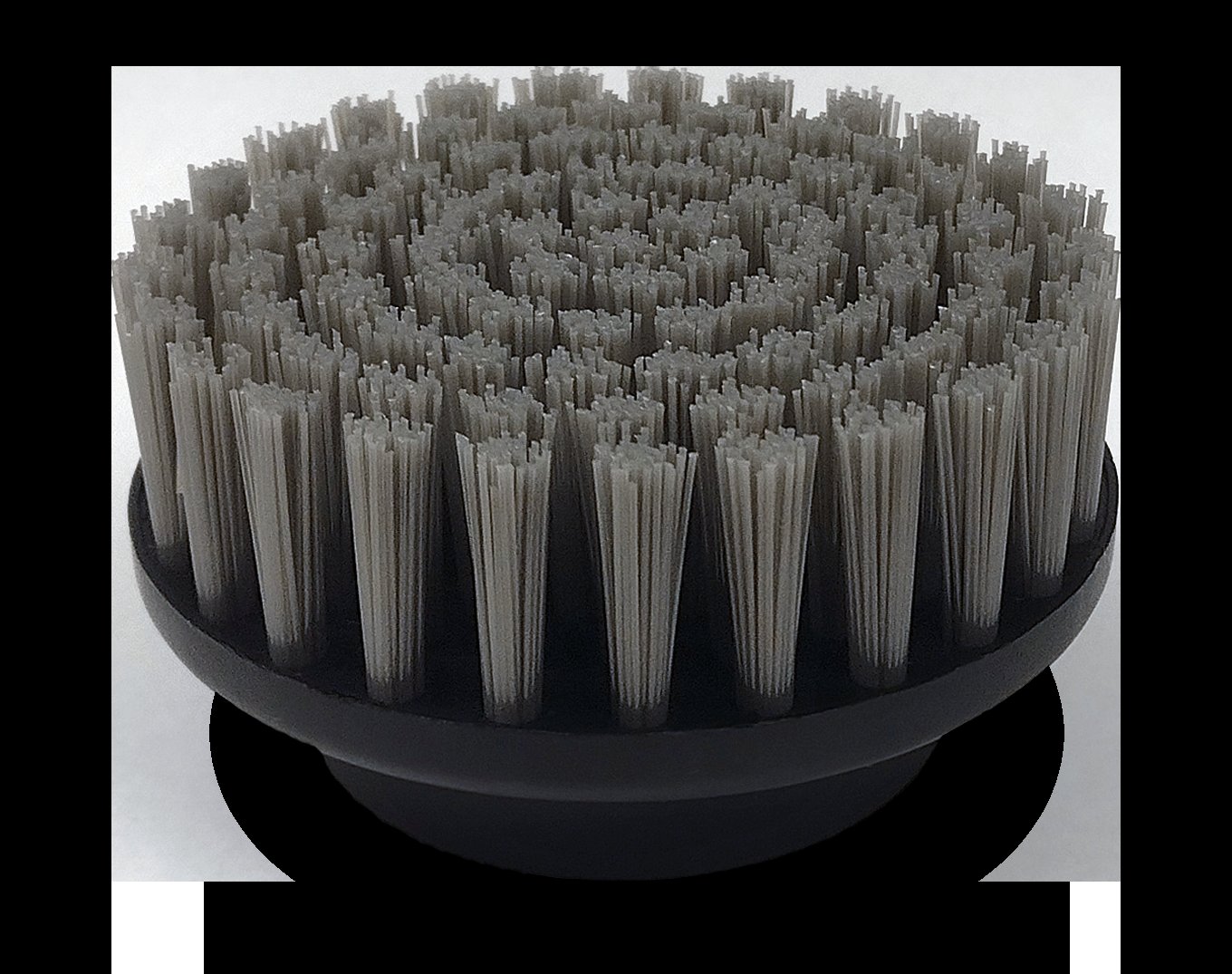
Two controlled speeds, 140 and 280 RPM, let you match intensity to the job: the lower speed for lighter cleaning and more delicate surfaces, the higher for deeper cleaning and tougher dirt. Four interchangeable brush heads (Soft, Scrub, Sole, and Suede) let you switch brushes based on the material you’re cleaning. The 3-inch cleaning surface covers more area per pass, and USB-C charging keeps it ready when you need it.
Always test on a small, hidden area first, and follow each shoe’s care instructions.
Sometimes, but check the care label first. Many knit sneakers are labeled non-washable because the agitation and heat can distort the upper, weaken adhesives, and shrink the fabric. If the label allows machine washing, use cold water, a mild detergent, a mesh bag, and air-dry only. Hand cleaning with a soft brush and a small amount of cleaning solution gives you more control over white knit sneakers and reduces the risk of shape loss.
Skip bleach. It can weaken fibers, react with adhesives, and leave a yellow or gray cast rather than a clean white. For most white knit sneakers, a mild detergent or a baking soda paste handles everyday dirt and light stains. Test any cleaner on a small, inconspicuous area first to check colorfastness, and follow the manufacturer’s care instructions. If a stain resists gentle cleaning, treat it again rather than reaching for a harsh chemical.
Yellowing usually comes from leftover cleaning residue, improper drying, or prolonged sun exposure. Rinse thoroughly, blot with a microfiber cloth, and air-dry away from direct sunlight. Stuff the shoes with paper to hold their shape and speed drying. Preventive care matters too: clean regularly, avoid over-wetting the fabric, and store sneakers in a dry place.
A soft-bristled brush, a microfiber cloth, and a mild cleaning solution cover most jobs. For deeper cleaning on tougher areas, a firm bristle brush or a powered tool like the Rekanize Reviver gives you more control. Reviver has two speeds (140 and 280 RPM) and four interchangeable brush heads, including a natural fiber Soft brush for gentle cleaning and a Scrub brush for tougher dirt and everyday buildup. Always match the brush and speed to the surface.
Keeping white knit clean is a habit, not a one-time rescue job. Build a simple routine, use the right brush for each surface, and your rotation stays sharp. Explore Reviver and see how controlled, powered cleaning fits into your sneaker care.
Can you wash sneakers in the sink? Yes, with the right method: a gentle hand wash, a check of your materials, and a dry that keeps odor away.
Learn how often to clean expensive sneakers based on wear count, material, and conditions. Protect your collection with a routine that works.
